A Dark Journal Collection
The Spirit Encyclopedia
Every Spirit Has a Story. Every Legend Hides a Secret.
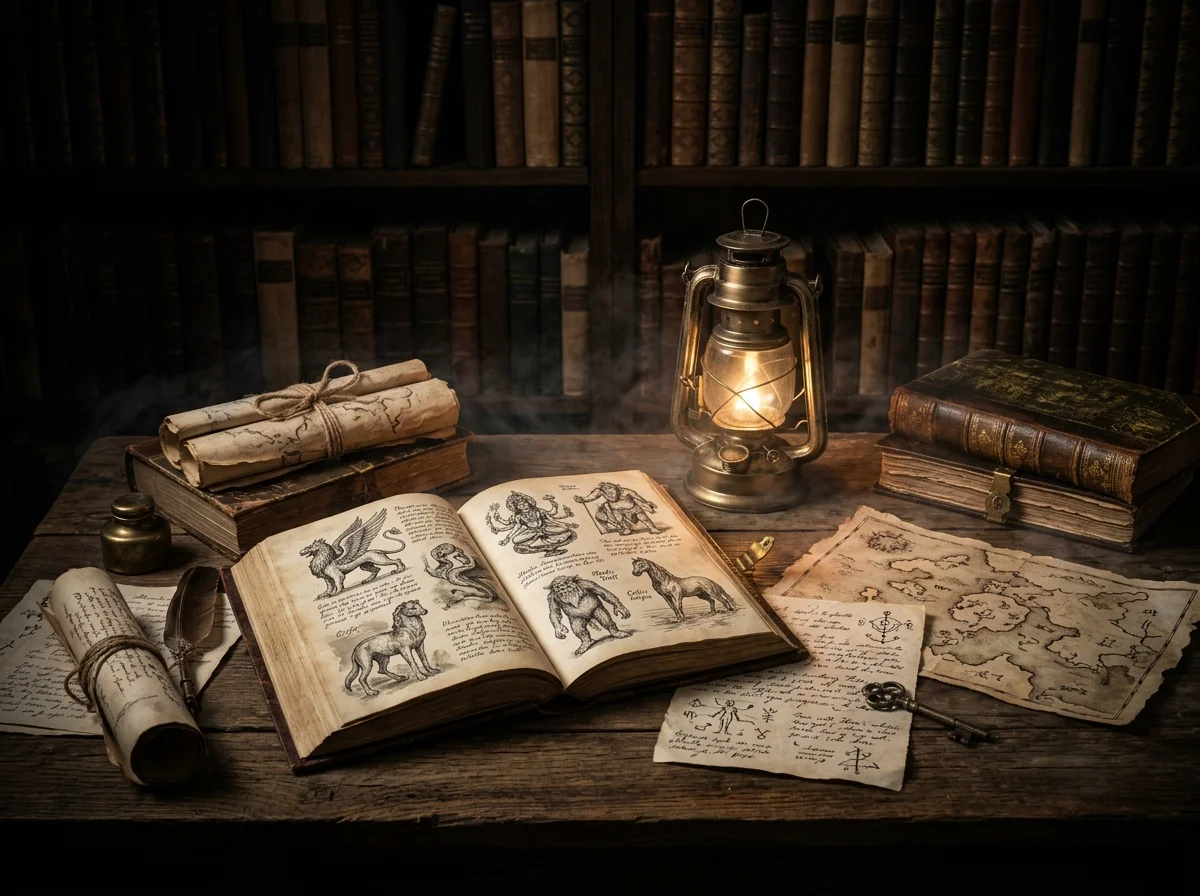
Welcome to The Spirit Encyclopedia, a mysterious corner of Dark Journal dedicated to the spirits, ghosts, supernatural beings, and ancient folklore found across India and around the world.
From the enchanting Aanchhriyan of Uttarakhand to chilling legends of wandering spirits and mysterious entities, every tale carries its own history, cultural beliefs, and unanswered questions.
Explore the stories passed down through generations, discover how different cultures describe the unknown, and uncover the fascinating traditions behind these mysterious beings.
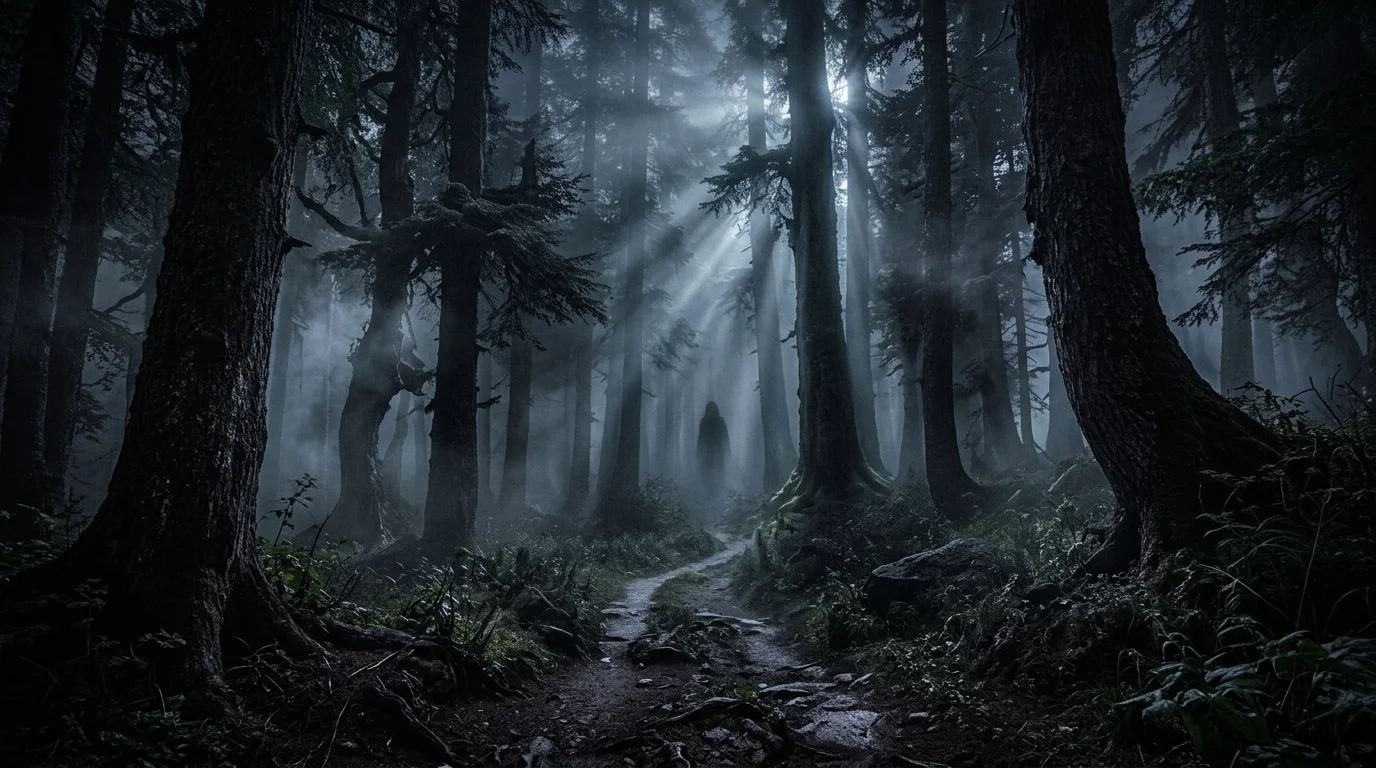
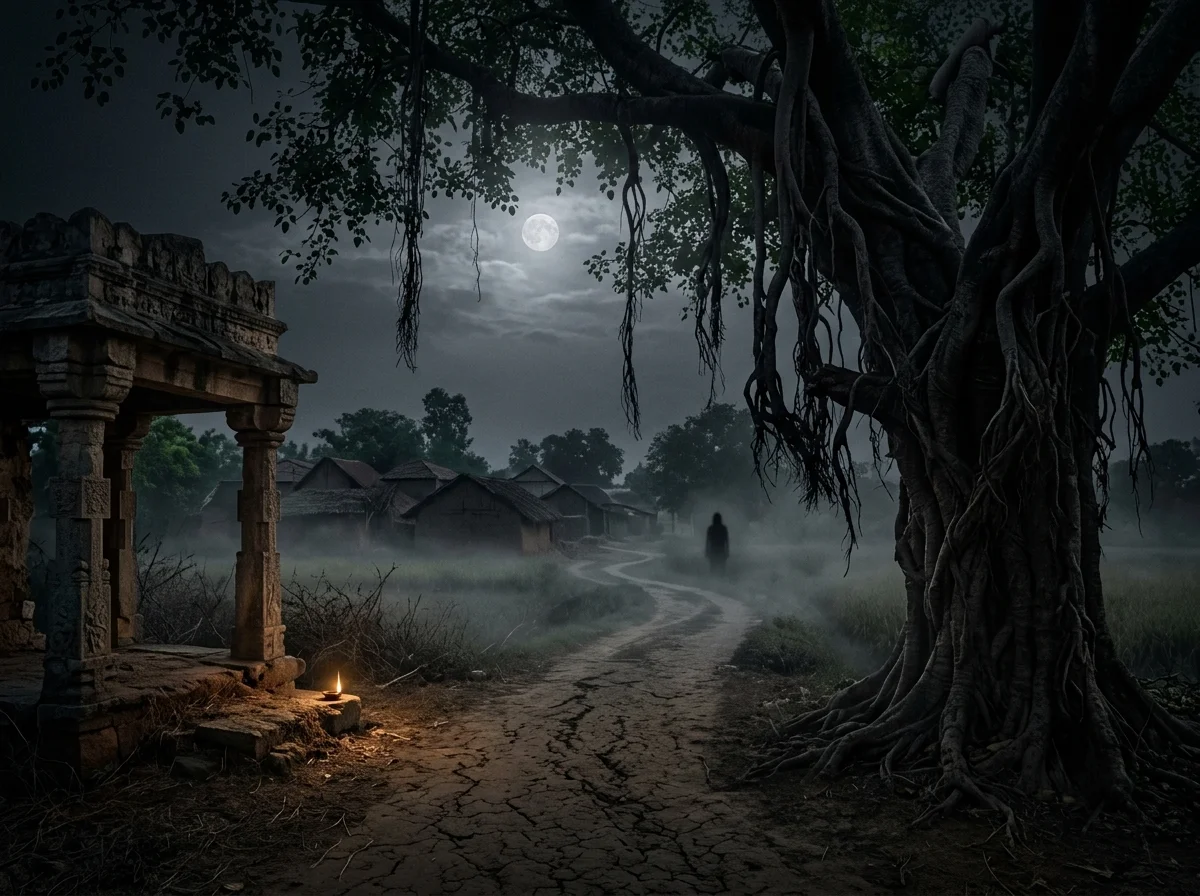
Are these beings simply legends shaped by human imagination, echoes of ancient traditions, or mysteries that continue to capture our curiosity? Here, folklore meets exploration, and every story invites you to look a little deeper.
Our entries explore traditional beliefs and reported legends while distinguishing cultural storytelling from claims that can be independently verified.
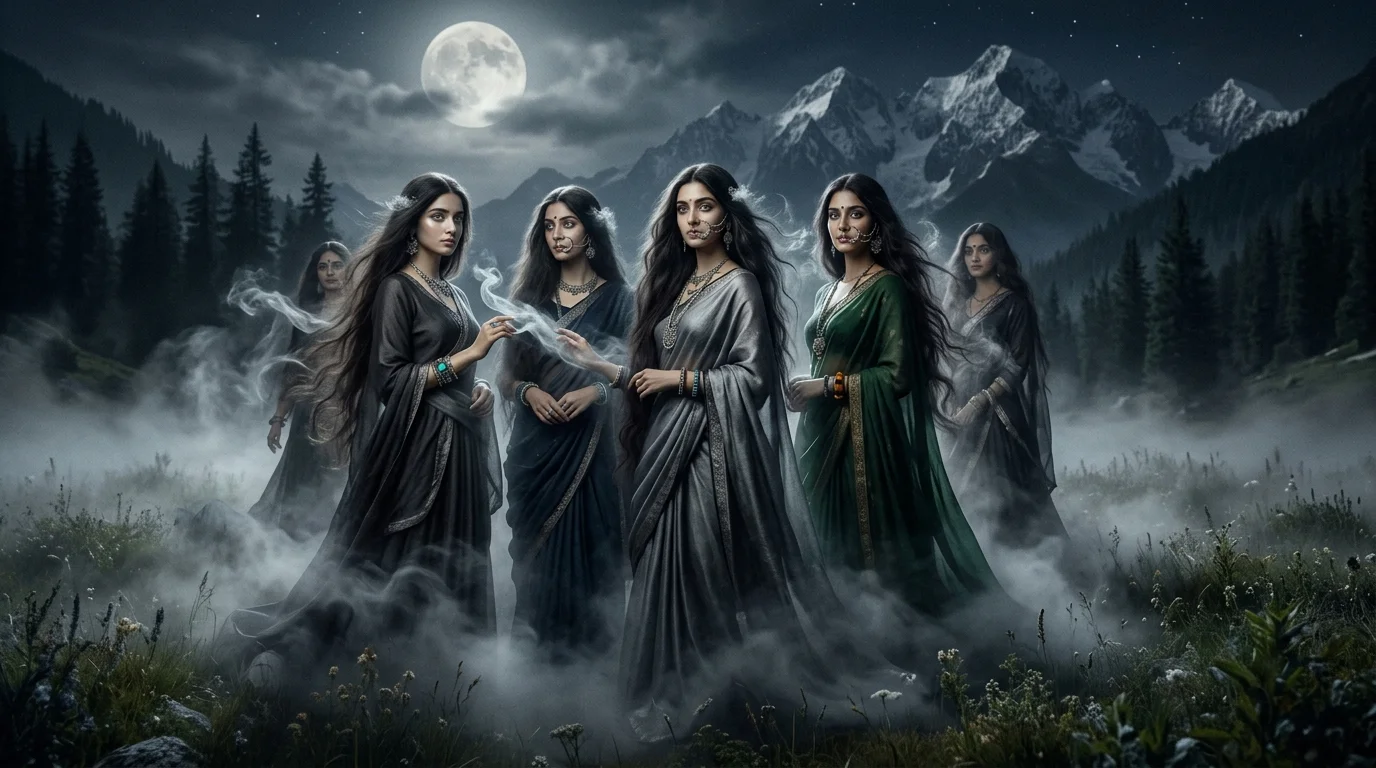
Step into the shadows. Discover the legends.
The unknown has many names.
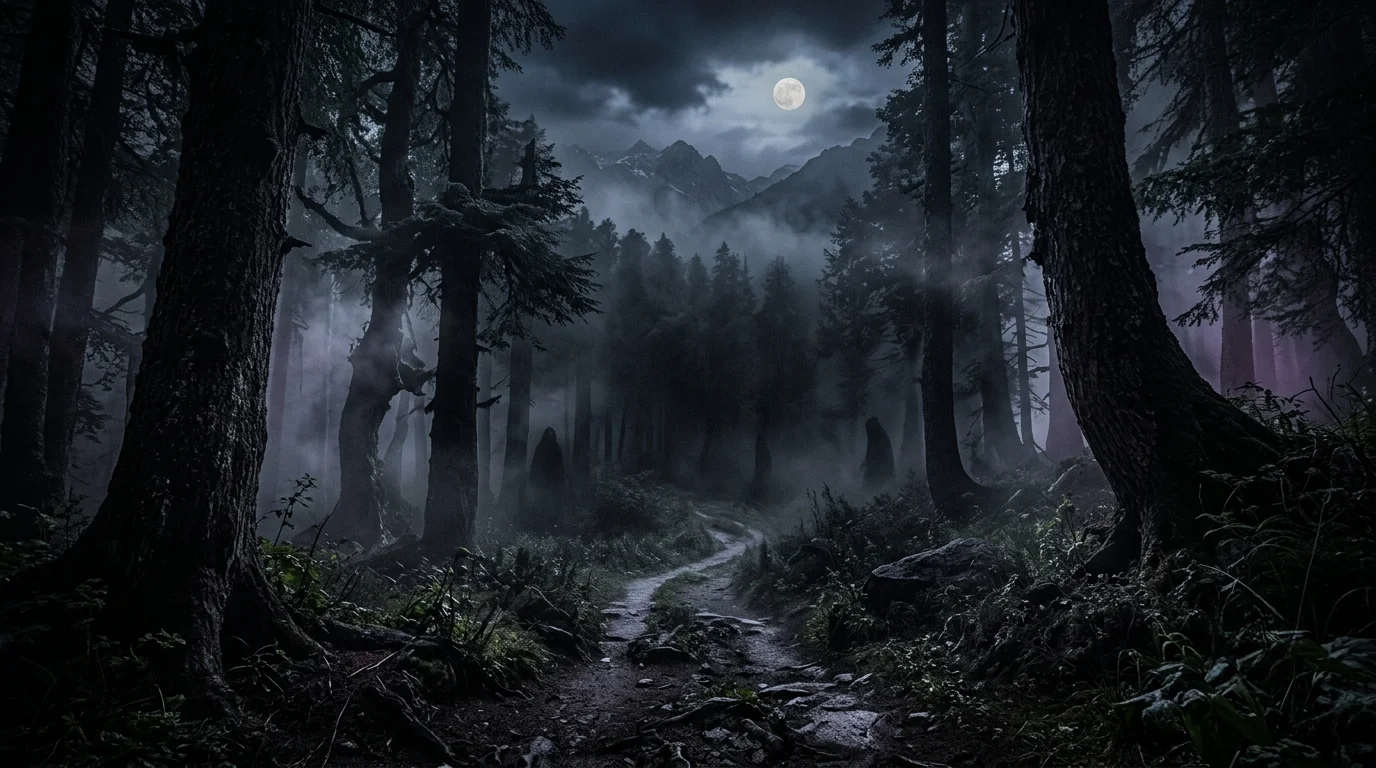
The Dybbuk
A restless spirit of Jewish folklore, believed to cling to the living.
What Is a Dybbuk?
In Jewish folklore, a Dybbuk is a spirit believed to attach itself to a living person. The term comes from a Hebrew root meaning "to cling" or "to cleave." Unlike the familiar idea of a ghost haunting a location, the Dybbuk legend focuses on a spirit believed to enter or cling to a living host.
The concept developed within Jewish mystical traditions and Eastern European Jewish folklore. Some traditional accounts describe an unsettled soul seeking resolution, although the explanations and details vary between stories.
ARCHIVE CLASSIFICATION
Category: Folkloric possessing spirit. Historical significance: Jewish religious and cultural tradition. Scientific status: Supernatural possession by a Dybbuk has not been verified by reliable scientific evidence.
The Dybbuk is not simply interchangeable with a demon. Traditional stories often describe it as a human soul, making its place in folklore more complex than the standard horror-monster stereotype.
The Soul That Would Not Rest
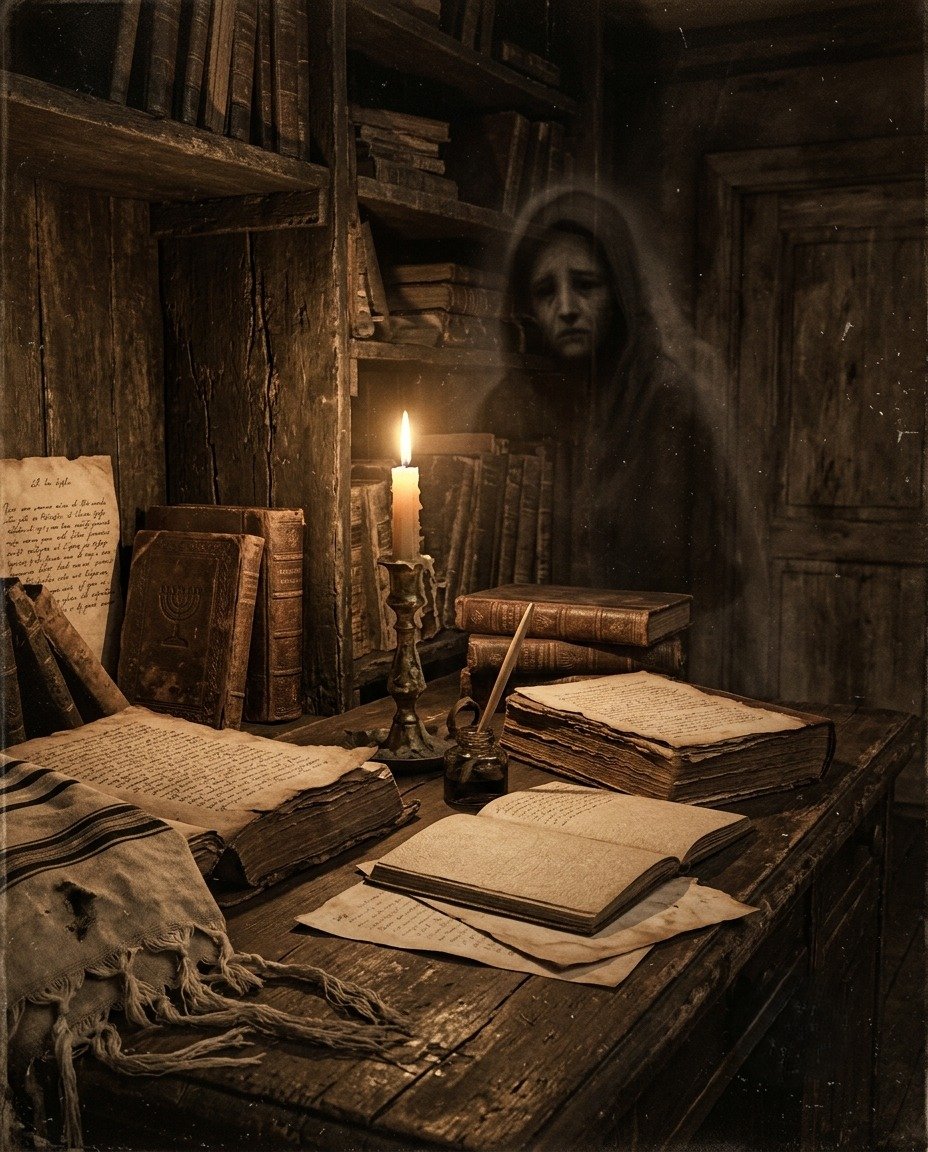
The Dybbuk tradition is connected with Jewish mystical discussions of the soul and ideas such as gilgul, a tradition concerning the transmigration of souls. Across different periods, religious interpretations mixed with oral stories and local customs.
In some versions, a soul unable to find rest was believed to seek refuge in a living person. Other stories placed greater emphasis on unresolved spiritual matters or moral obligations.
These ideas reveal how communities interpreted life, death, and spiritual responsibility. They are important subjects of cultural history, but the beliefs themselves do not establish that spirits can enter human bodies.
Leah and Khonen: A Tragic Legend
One of the most influential Dybbuk stories comes from The Dybbuk, or Between Two Worlds, a play by S. An-ski. Inspired by Jewish folklore, it became a landmark of Yiddish theatre and brought the legend to a wider audience.
A Love That Was Forbidden
Khonen is a poor young scholar who falls in love with Leah, the daughter of a wealthy man named Sender. Their relationship appears doomed because Leah's father intends to arrange a different marriage for her.
Unable to accept the separation, Khonen turns towards mystical practices in the hope of changing their fate. In the play's tragic narrative, he dies before the two can be together.
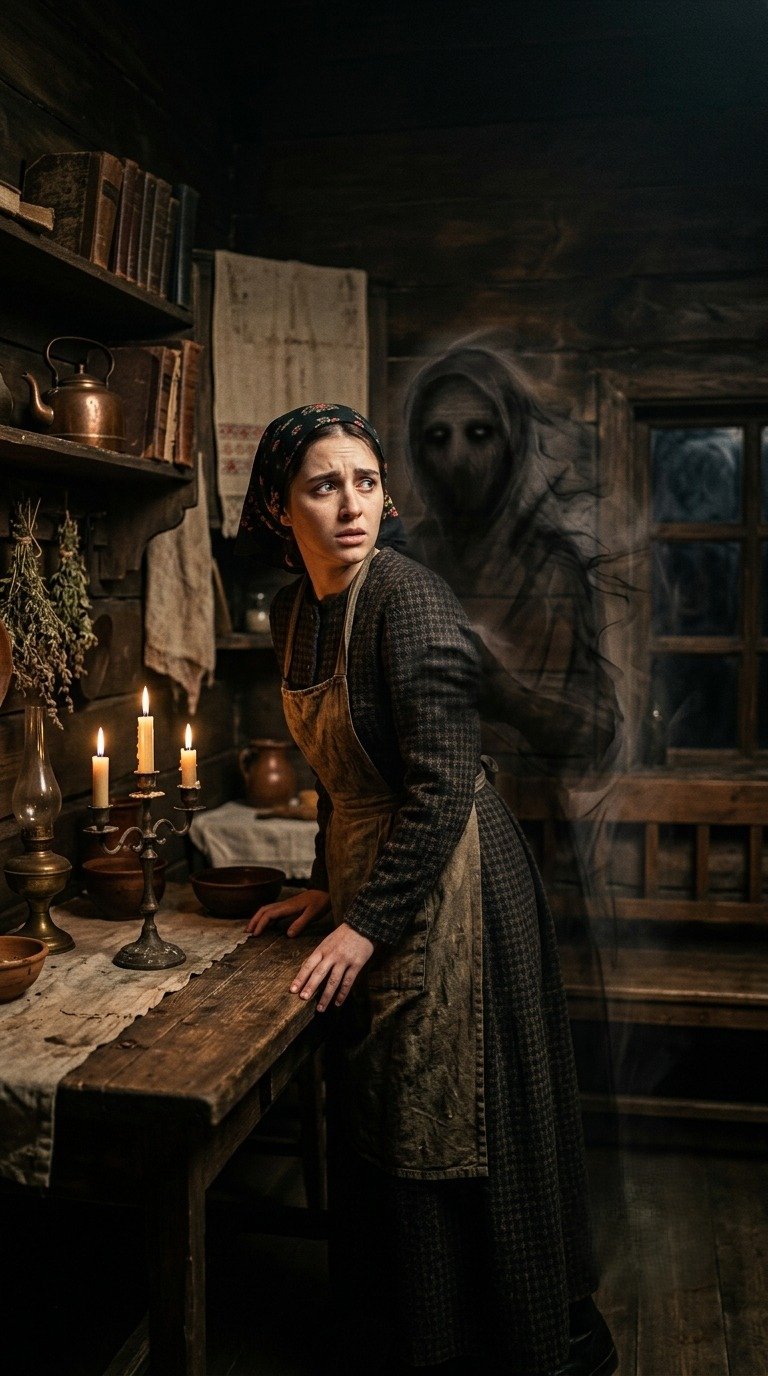
The Wedding and the Possession
On Leah's wedding day, the story takes its supernatural turn. Khonen's spirit is believed to enter her. Leah resists the future arranged for her, and the wedding becomes a confrontation between family authority, religious tradition, love, and death.
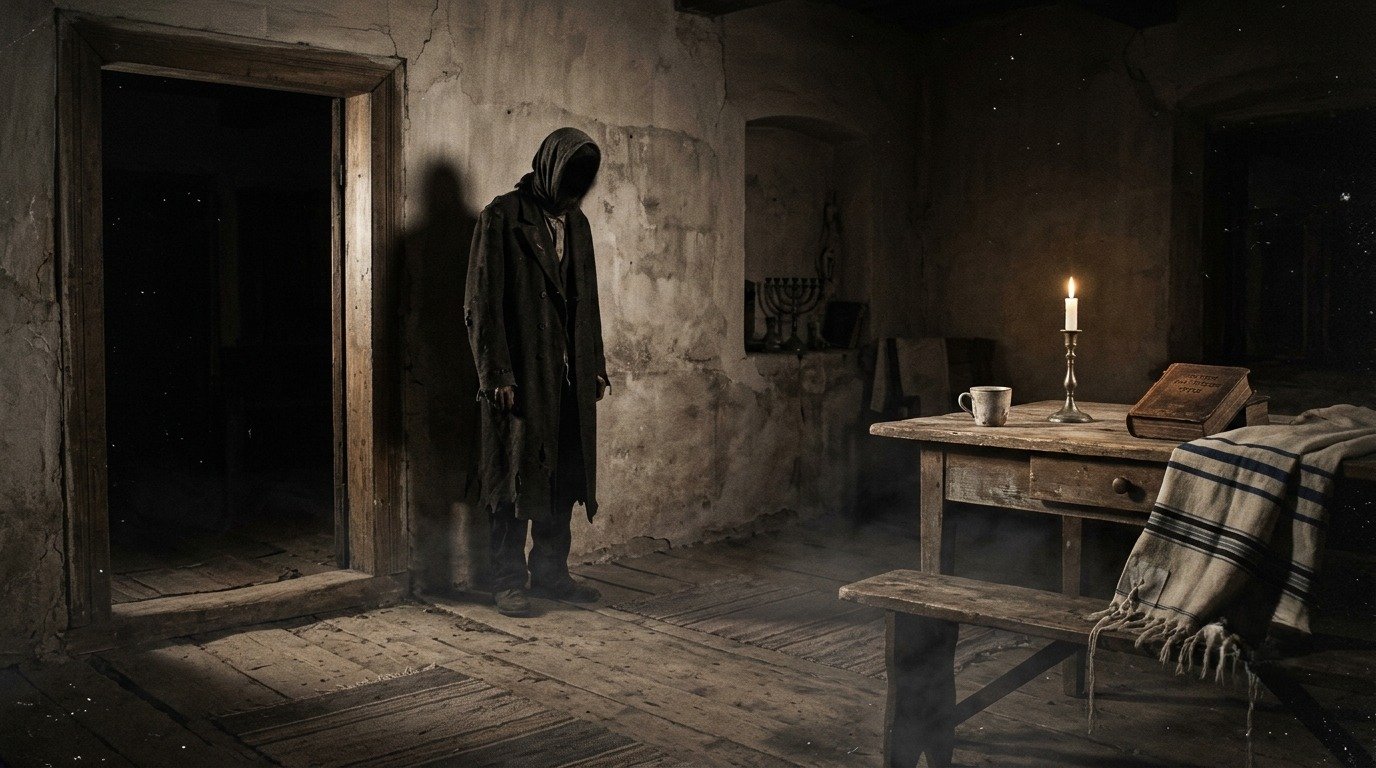
Between Two Worlds
A spiritual authority is called to intervene. During the confrontation, an earlier promise between the lovers' fathers adds another layer of guilt and betrayal to the tragedy.
The play explores the struggle between personal love, social expectations, spiritual belief, and the consequences of promises made by earlier generations.
HISTORICAL DISTINCTION
Leah and Khonen are characters in a literary drama inspired by folklore. Their story is not a verified historical possession case.
From Folklore to Theatre
S. An-ski's ethnographic work among Jewish communities in Eastern Europe helped preserve cultural traditions during a period of major social change. His play transformed folklore into a dramatic exploration of belief, love, and spiritual conflict.
Jewish mystical ideas about the soul formed part of the background to later Dybbuk narratives.
An-ski's expedition collected songs, stories, customs, and beliefs from Jewish communities in Eastern Europe.
The stage production of The Dybbuk premiered in Warsaw after An-ski's death.
Theatre productions and a Yiddish-language film adaptation helped establish the Dybbuk as an enduring cultural figure.
Books, films, and online paranormal stories continue to reinterpret the legend.
The Dybbuk Box
A modern paranormal story concerns an old wooden cabinet popularly called the Dybbuk Box. It gained attention after an online auction listing in 2003 described the object as haunted.

The cabinet became famous through paranormal storytelling, online discussions, and later media adaptations. But the existence of a physical object does not establish that it contains a supernatural entity.
The modern Dybbuk Box legend should also be distinguished from the older Jewish folklore tradition. They are related through the name and concept, but their histories are different.
Myth vs Evidence
Traditional Beliefs
- A spirit may cling to a living person.
- Unresolved spiritual matters may explain its return.
- Traditional accounts describe attempts to resolve possession.
- The stories reflect the cultural and religious worlds of their tellers.
What Can Be Verified
- Written works document the Dybbuk tradition.
- Archives preserve photographs of theatrical productions.
- Literature and film show how the legend developed.
- No authenticated photograph proves the existence of an actual Dybbuk.
The Encyclopedia Verdict
Historical status: A documented folkloric and religious concept with a significant cultural history.
Paranormal status: Literal possession by a Dybbuk remains unverified by reliable scientific evidence.
The legend remains powerful because it explores grief, guilt, identity, spiritual responsibility, and humanity's desire to understand what may lie beyond death.
Sources & Further Reading
- National Library of Israel — Archival photographs of The Dybbuk
- YIVO Archives — Materials relating to Der dibek
- Scholarly study — The Dybbuk: Its Origins and History
- Smithsonian American Art Museum — Dybbuk artwork
Editorial note: Images are illustrative unless their original sources establish their historical context. Folklore and paranormal claims are not presented as scientific fact.
The Pontianak
She is said to appear when the village is asleep, when the roads are empty, and when the trees become darker than the night around them.
Before the Pontianak became a familiar figure in modern horror, she belonged to a much older world of oral stories, village warnings, grief, death, and things that were never supposed to return.
The details changed from one storyteller to another. But the image remained hauntingly familiar: a woman, long black hair, a white dress, and a darkness that seemed to follow her.
When Everyone Had Gone Inside
The village looked ordinary during the day. Wooden houses stood along narrow paths. Children moved between them, neighbours talked, cooking smoke drifted through the air, and the surrounding trees seemed harmless.
But after midnight, the same village became almost unrecognisable.
Doors were shut. Lamps disappeared one by one. The roads emptied. Beyond the last house, the forest swallowed the moonlight.

And this was when the old stories began.
People spoke of a woman who could sometimes be heard before she was seen. A distant cry. A strange laugh. A sound somewhere beyond the houses.
Nobody wanted to investigate.
She Looked Human
The frightening part of the Pontianak was not that she looked like a creature from another world.
She looked like a woman.
In many modern descriptions, she appears wearing a long white dress, with extremely long black hair falling over her face. From a distance, there may be nothing obviously supernatural about her.
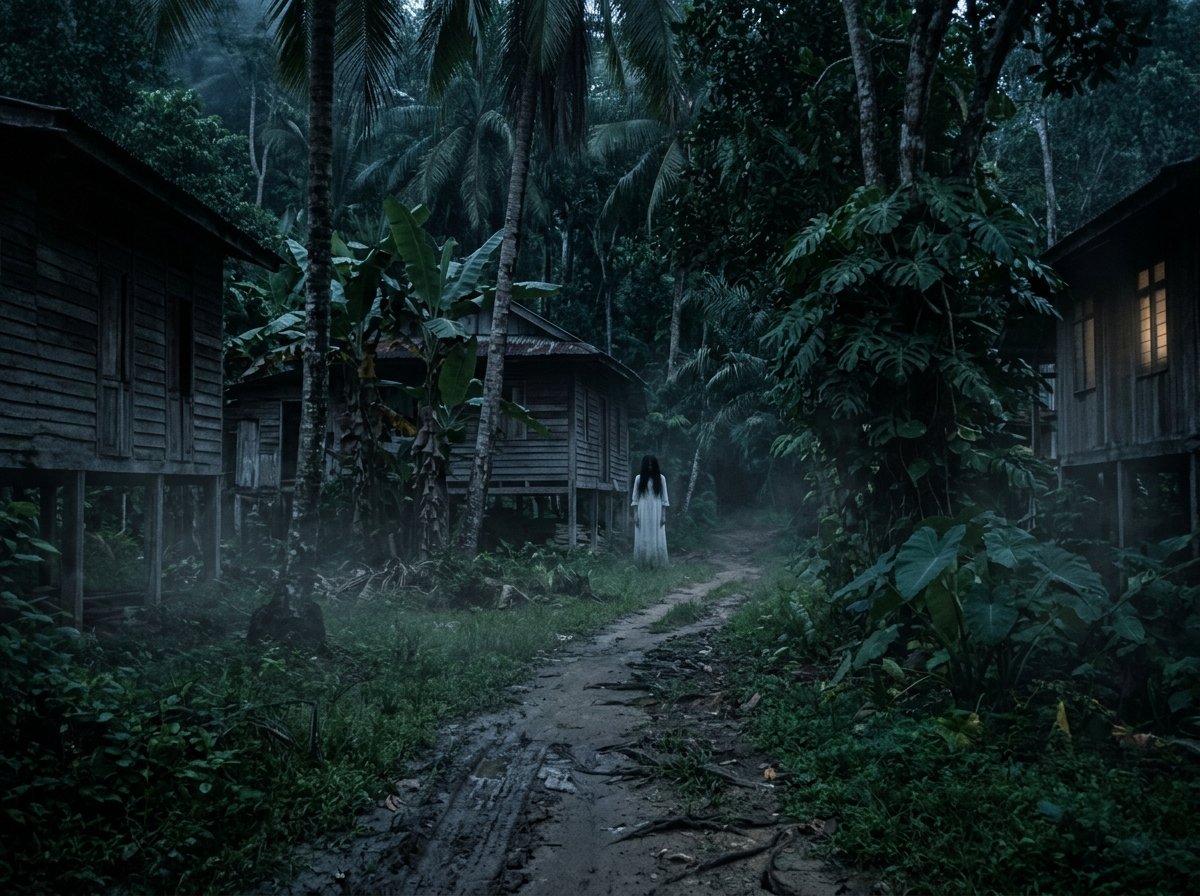
That uncertainty is what makes the legend work.
A person standing beneath a tree at night could simply be another person.
Until she does not move.
Until the road is empty.
Until you realise that nobody else saw her arrive.
A Woman Who Did Not Leave
Many versions of the Pontianak legend connect the spirit with the death of a woman, particularly a woman who died during pregnancy or childbirth.
The exact details differ between communities and retellings. Folklore is rarely as tidy as a police report. Humans apparently prefer adding details every time they tell a story.
What remains consistent is the idea of an unresolved death becoming something supernatural.
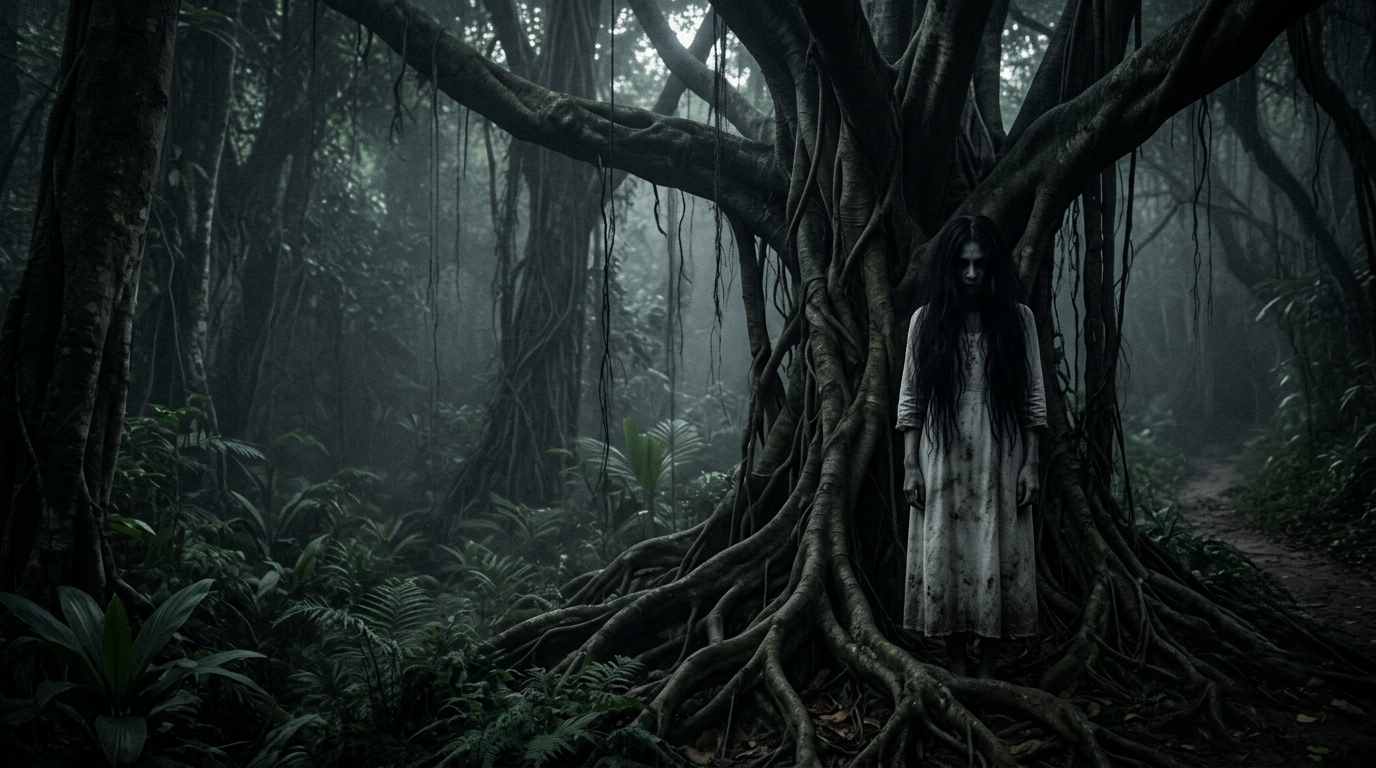
Instead of disappearing completely, the dead woman becomes a figure who returns to the world of the living.
The legend therefore carries something more complicated than simple horror. Beneath the supernatural story is grief, death, and the fear of a life ending in circumstances that feel unfinished.
First You Hear Her
Some versions of the legend place unusual importance on sound.
A cry. A laugh. A strange noise somewhere outside the house.
The sound becomes a warning that something may be nearby.
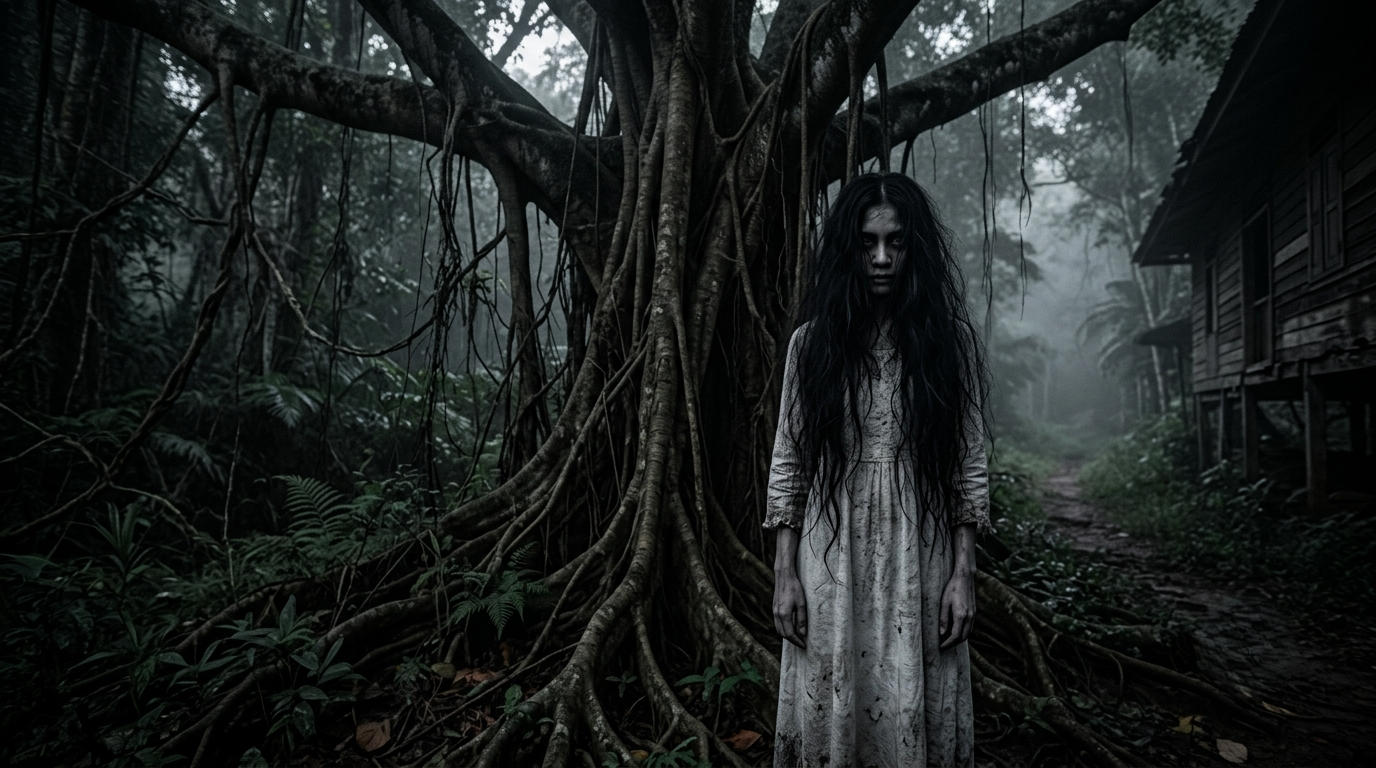
The Darkness Is Listening
In a quiet village, even an ordinary sound can become frightening when nobody can explain where it came from.
This is one reason supernatural folklore survives so well. It takes something ordinary and gives it a meaning that cannot easily be forgotten.
Between the Roots and the Fog
In modern depictions of the Pontianak, enormous trees often become part of the setting.
Their roots twist across the ground. Their branches block the sky. Their shadows create shapes that are difficult to recognise.
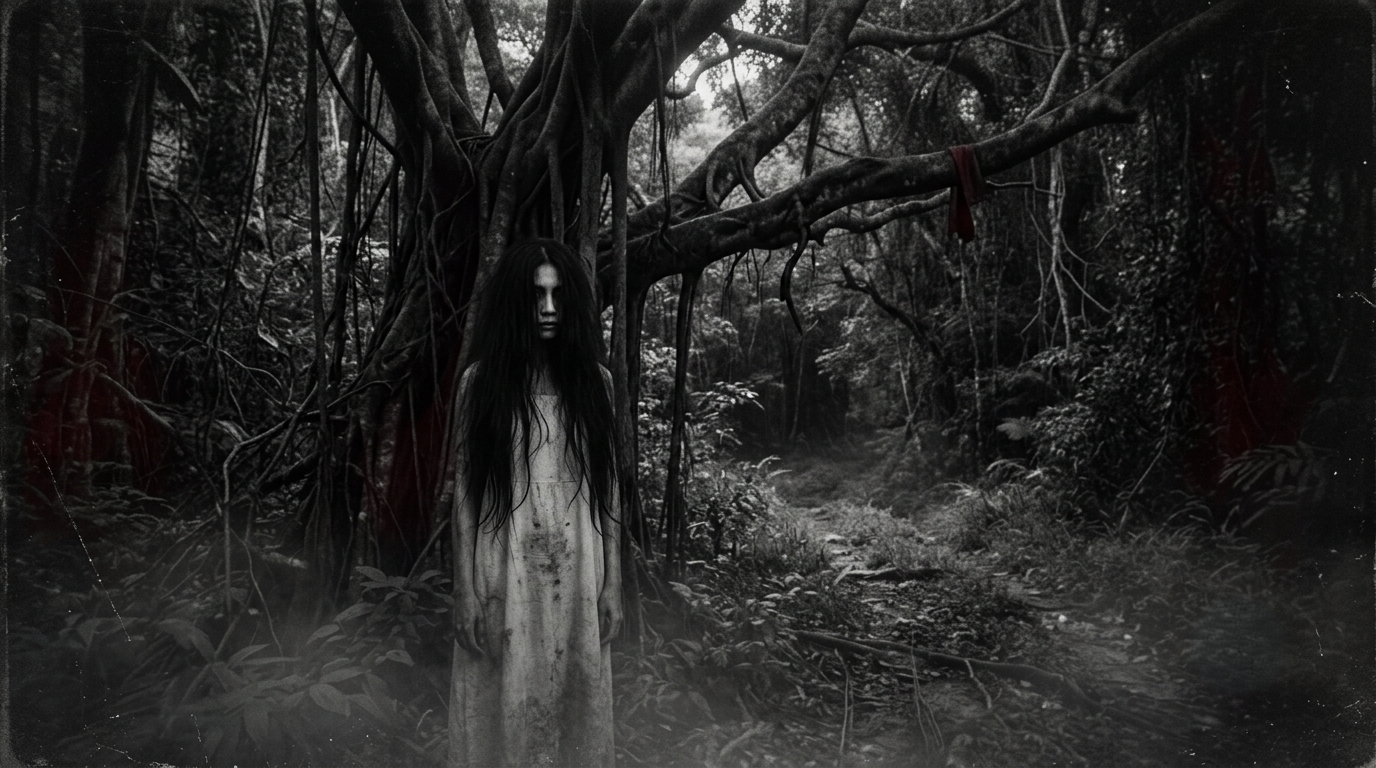
Imagine walking past one of those trees alone.
You hear something behind you.
You turn around.
Nothing.
You continue walking.
Then you hear it again.
From Village Story to Horror Icon
Over time, the Pontianak moved beyond oral storytelling. She became part of literature, cinema, television, and popular horror culture across Southeast Asia.
Each generation changed the story slightly. Some versions emphasised tragedy. Others focused on fear and revenge. Modern horror often presents the Pontianak as a terrifying supernatural antagonist.
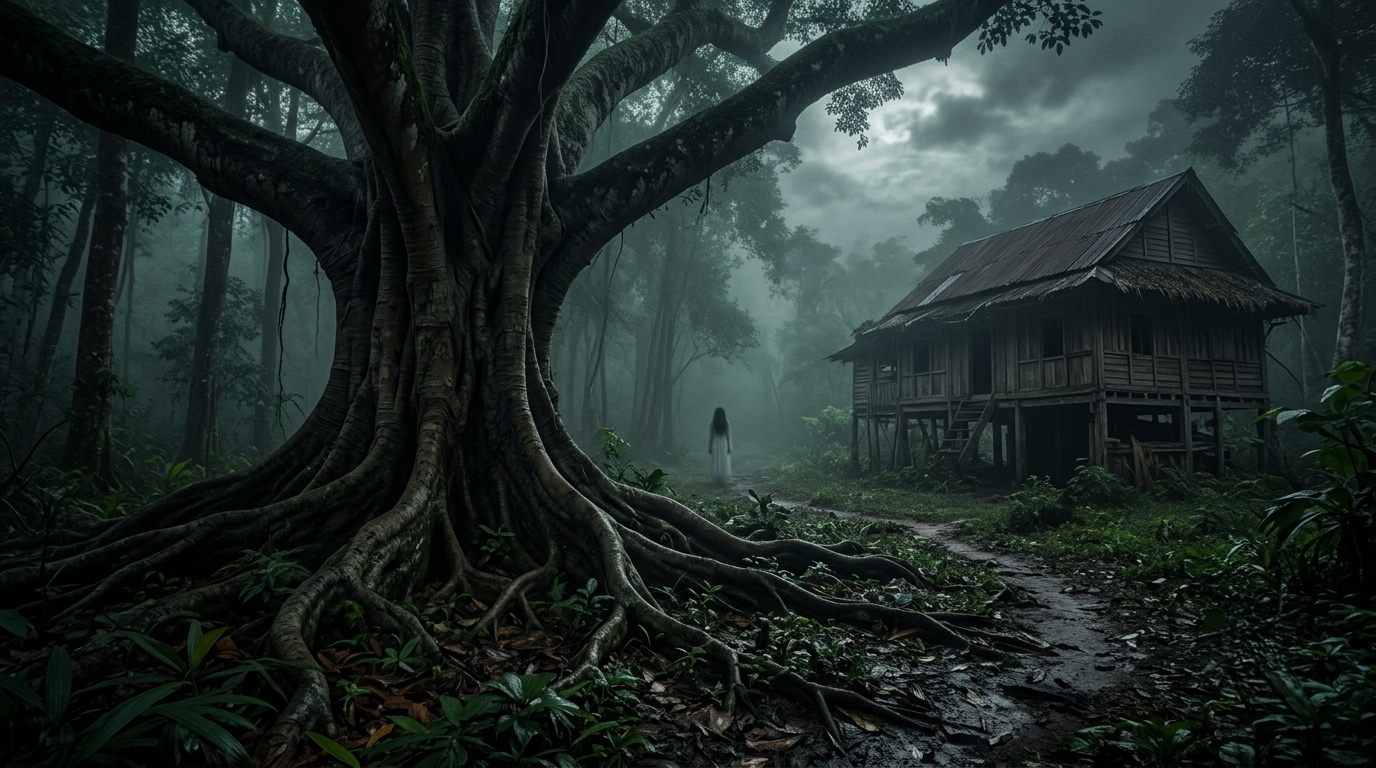
Yet the central idea remains remarkably simple: something associated with death has returned to the world of the living.
- The Pontianak is a supernatural figure associated with Malay and Indonesian folklore.
- Many modern versions connect the spirit with a woman who died during pregnancy or childbirth.
- The familiar image of long black hair and a white dress is especially prominent in modern representations.
- Folkloric descriptions vary between regions and retellings.
- The existence of the supernatural spirit has not been scientifically established.
Was She Ever Really There?
There is an important difference between saying that a legend is culturally real and saying that its supernatural claims have been proven.
The Pontianak is unquestionably real as a subject of folklore. The stories, traditions, films, books, and cultural references surrounding the figure can all be studied.
But there is no reliable scientific evidence proving that a supernatural Pontianak physically exists.
That does not make the story meaningless.
Folklore often tells us more about human fears, grief, social rules, death, and memory than it tells us about the supernatural itself.
She Is Still Waiting
The village sleeps.
The houses are dark.
The road beyond the last lamp is empty.
Somewhere between the trees, a figure in white stands completely still.
Maybe it is only a shadow.
Maybe someone is standing there.
Or maybe the story has simply found another person willing to believe it.
THE ONRYŌ
Some spirits are remembered for how they died. Others, for what they could never forgive.
In Japanese folklore, an Onryō is a spirit associated with resentment, injustice and vengeance. It is not simply a ghost that refuses to leave. In the stories told about it, the past refuses to stay buried.
The House at the End of the Road
The old house stood at the end of a narrow road, separated from the rest of the village by a row of dark trees. During the day, it looked abandoned. Its wooden walls were weathered, its garden had disappeared beneath weeds, and the paper screens behind its windows had turned the colour of old bone.
But the villagers had a rule about that house. They did not stop outside it after sunset, and they never opened the small room at the end of its corridor.
Nobody agreed on why the rule existed. Some said a woman had once lived there. Others claimed the house had witnessed a betrayal that was never brought to justice. The details changed whenever the story was told.
Only one detail remained the same: after midnight, someone was sometimes seen standing behind the paper screen.
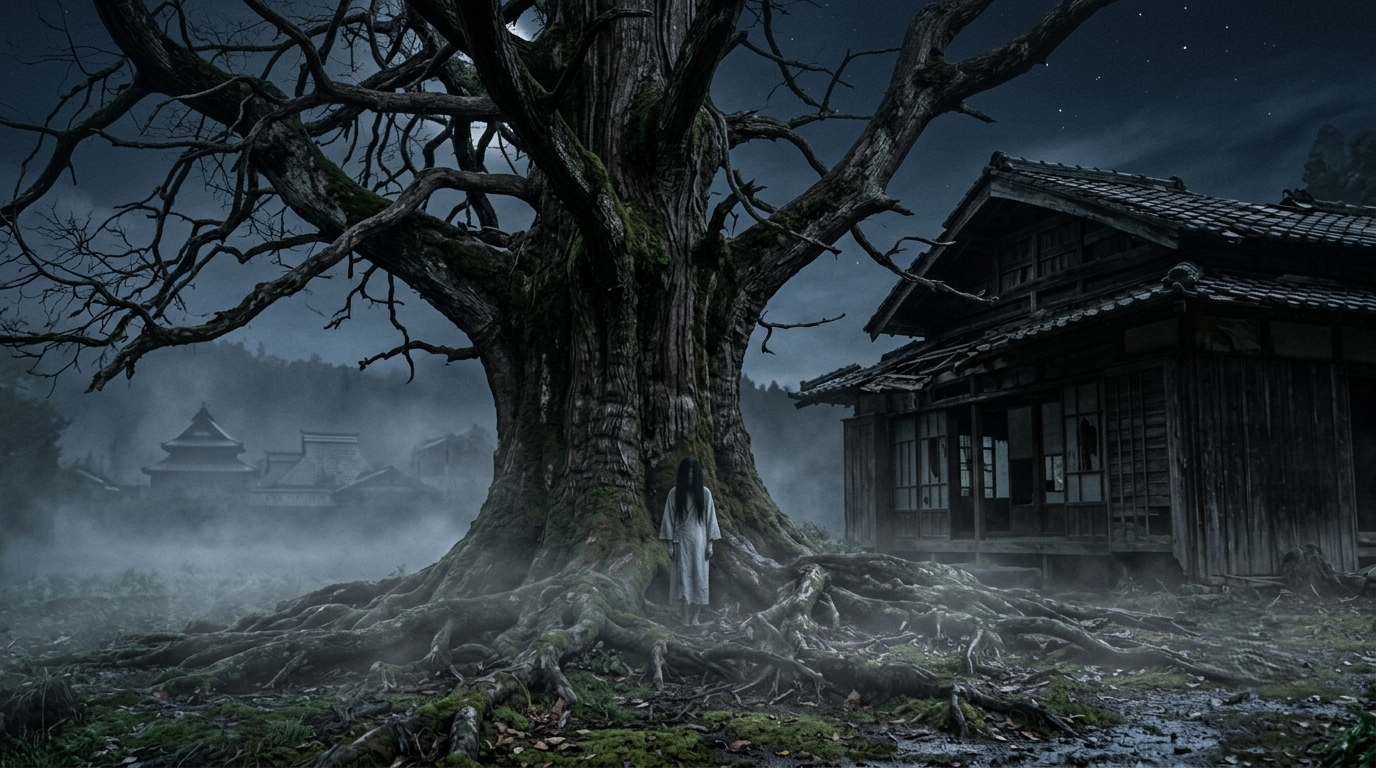
The figure never waved. It never called for help. It simply stood there, as though waiting for someone who had promised to return.
She Was Not Supposed to Be There
One evening, a traveller arrived in the village after missing the last train. He was offered a place to stay, but the room was small, the floor was cold, and the wind kept rattling the shutters.
Shortly after midnight, he heard footsteps in the corridor.
Slow. Barely audible. Then silent.
He slid open the door. At the far end of the corridor stood a woman dressed in white. Her long black hair covered most of her face. She did not look toward him, yet he felt with uncomfortable certainty that she knew he was there.
He called out. The woman did not answer.
A cold draft moved through the hallway. The lantern beside him flickered once, and the corridor seemed to stretch farther into the darkness than it had a moment earlier.
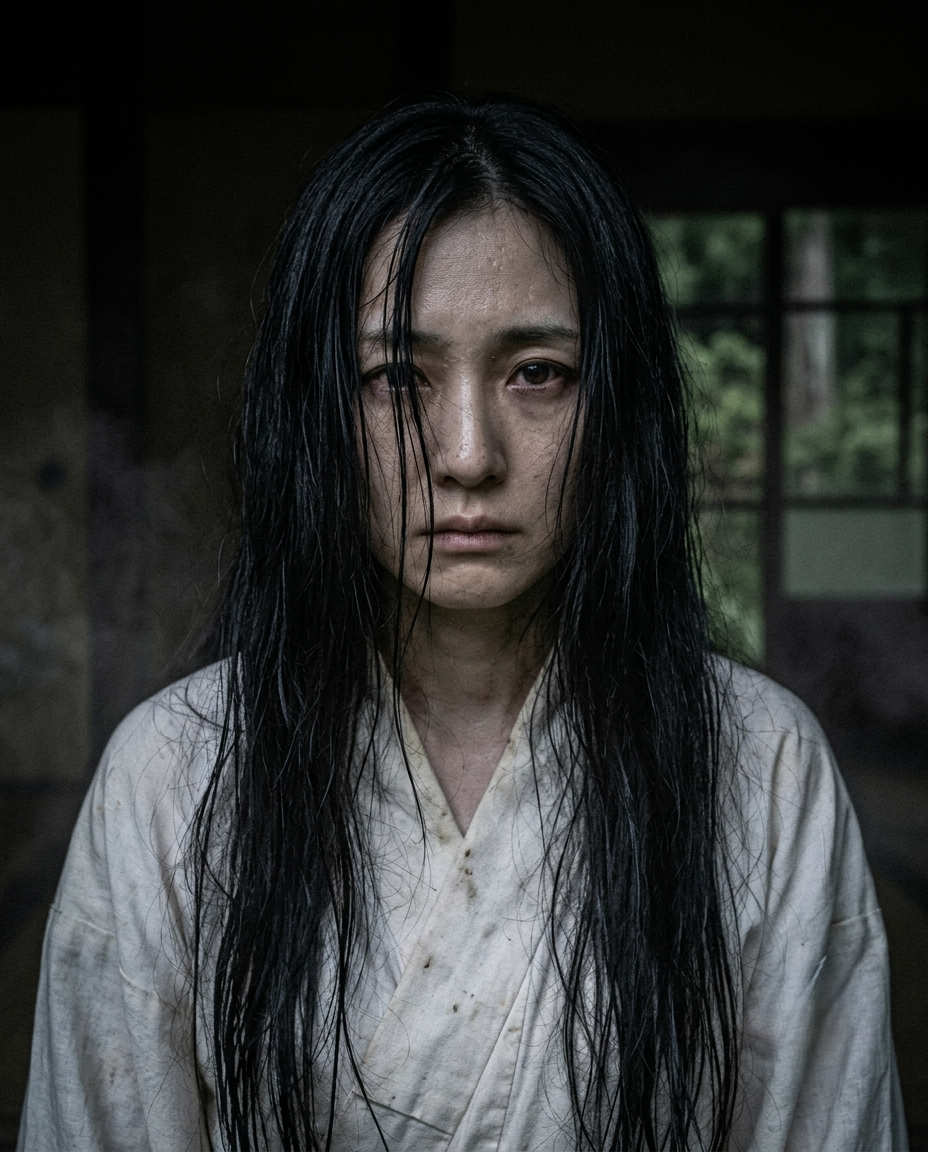
When the traveller blinked, the corridor was empty.
In the morning, he asked the owner about the woman. The owner's expression changed, but the answer was brief.
“You should not have spoken to her.”
This is an original fictional scene inspired by Japanese ghost-story traditions, not a documented historical encounter.
“The frightening part was not that she appeared. It was that the house seemed to remember her.”
A Spirit Born From Injustice
The traveller's question followed him into the next village. There, an elderly storyteller explained the word he had heard whispered by the locals: Onryō.
In Japanese supernatural tradition, an Onryō is a vengeful spirit whose anger or resentment remains powerful after death. These spirits are often connected to betrayal, cruelty, grief or injustice. In some tales, their presence brings misfortune to the people responsible for their suffering.
But there is no single story that defines every Onryō. The details vary across literature, theatre, regional legends and modern horror. Some stories focus on a wronged woman. Others explore the consequences of violence, broken promises or a crime that was never answered for.
The white clothing and long black hair now associated with Japanese ghost imagery became especially familiar through traditional theatre, visual art and later films. They are cultural conventions, not evidence that a supernatural being has one fixed appearance.
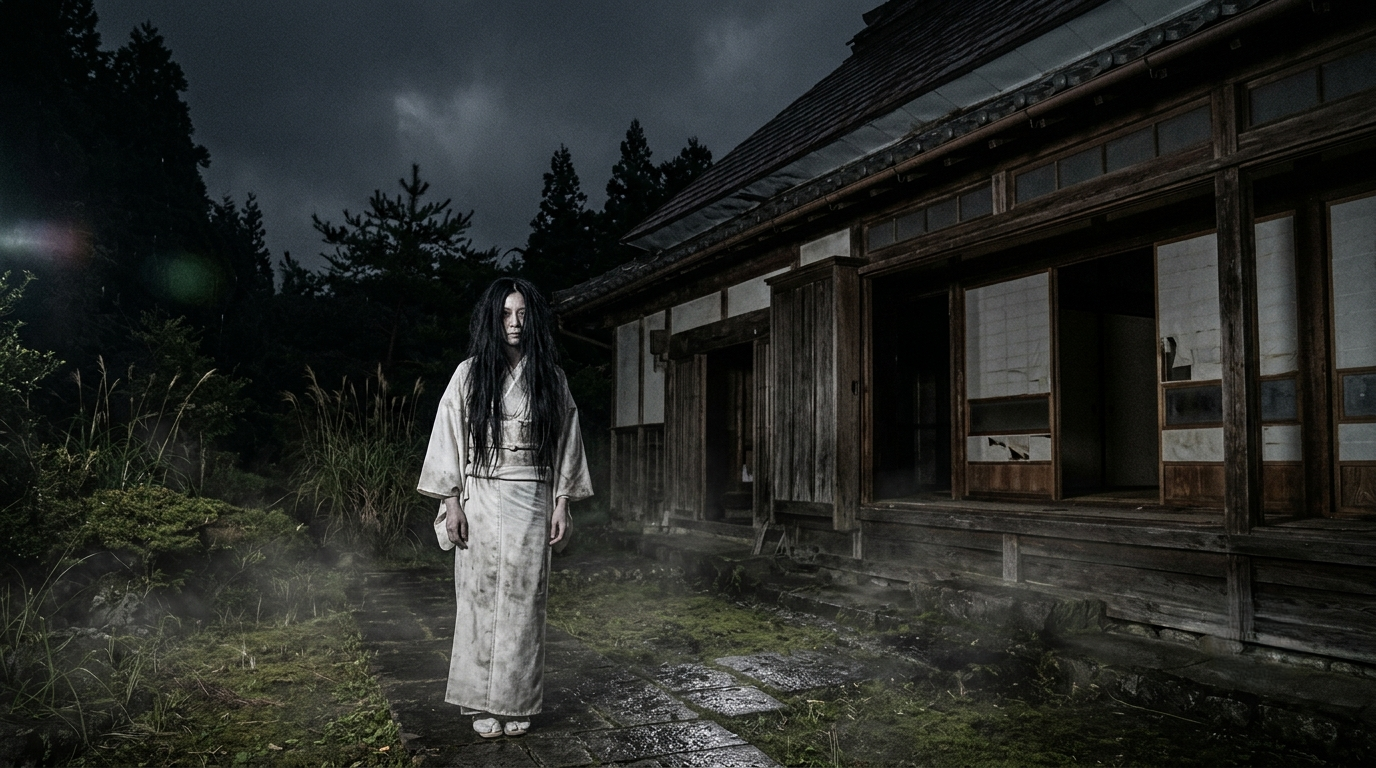
In these stories, revenge is not always presented as victory. The spirit may punish the guilty, but the cycle of suffering rarely brings peace. The dead remain trapped by the past, while the living become trapped by fear.
Oiwa: The Face Behind a Famous Ghost Story
One of the best-known figures associated with Japanese vengeful-spirit traditions is Oiwa, from the famous ghost story Yotsuya Kaidan.
The story was popularised in the early nineteenth century through the work of playwright Tsuruya Nanboku IV. It tells of betrayal, deception, murder and a spirit whose vengeance follows those responsible for her suffering.
Oiwa's story became influential in Japanese theatre and later adaptations. It helped shape the image of the wronged woman returning from beyond death, not as a peaceful visitor, but as a terrifying reminder that a crime cannot simply be forgotten.
Although the legend is sometimes discussed alongside stories of real people and places, its supernatural events belong to theatrical and folklore tradition. The story should not be treated as verified proof of a haunting.
At the End of the Corridor
In the traveller's story, he left the village before sunset the following day. He did not ask for another night indoors. He did not look back at the old house.
As the road curved between the trees, he noticed a white shape standing beside the gate. Long black hair hid its face. Its hands hung motionless at its sides.
He kept walking.
Behind him, a wooden door slid open with a quiet scrape.
He turned around. The gate was empty. The house stood silent, its windows dark beneath the evening sky.
Perhaps it had been a trick of the fading light. Perhaps the village's warnings had shaped what he thought he saw. Or perhaps the story had simply followed him farther than he expected.
By the time he reached the main road, he had decided never to tell the story again.
Naturally, that is where this fictional retelling begins.
Some Stories Refuse to Die
The Onryō endures because its story touches something deeply human: the fear that injustice will go unanswered, that grief will never settle, and that the past may return when we least expect it.
Whether read as a ghost story, a theatrical tradition or a warning about the consequences of cruelty, its shadow remains part of Japanese horror culture.
And somewhere in the story, the corridor is still waiting.
THE LUCIFER
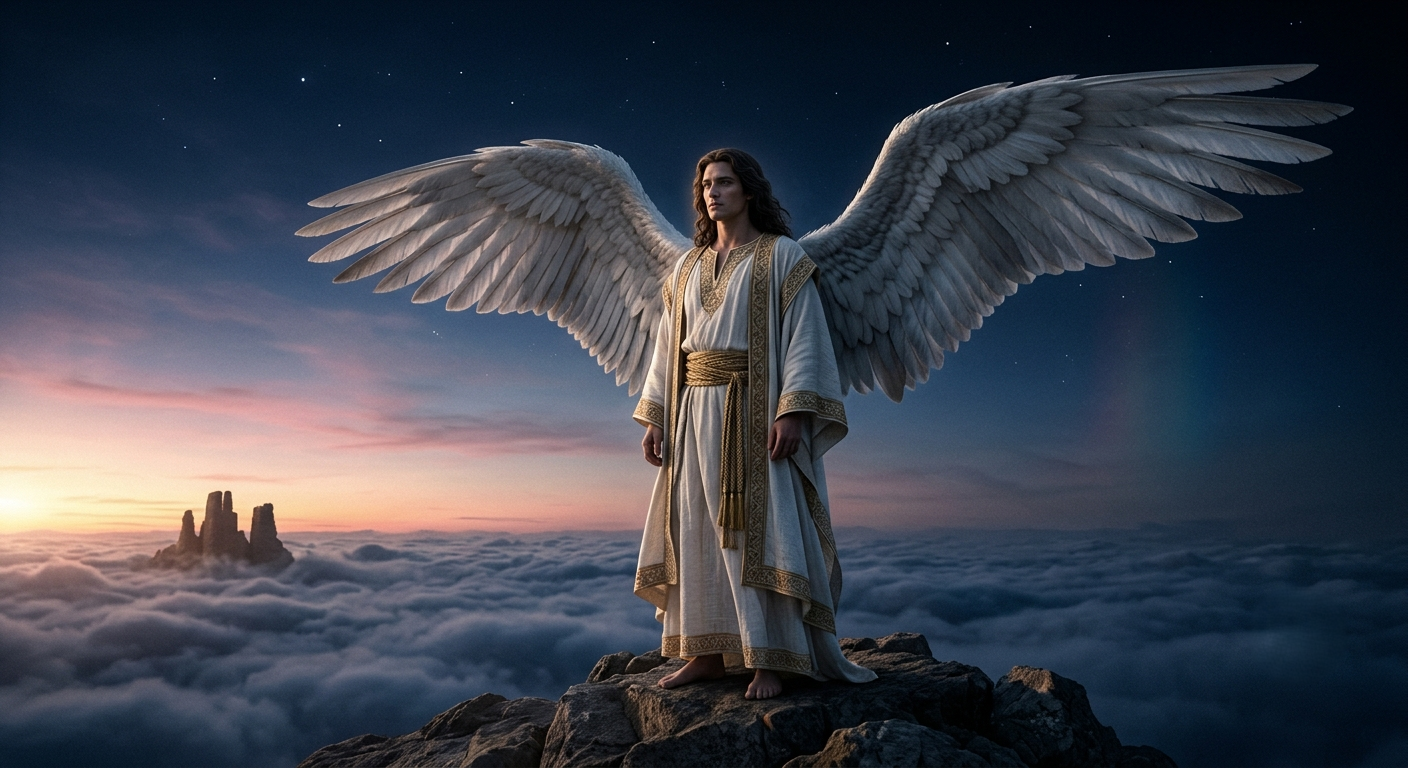
Before he became the Devil in popular imagination, he was associated with a word that meant something far brighter.
There are few names in Western religious imagination as powerful as Lucifer. A name once associated with light became, through centuries of interpretation, one of the most feared names in Christian demonology.
The Name That Meant Light
Long before the image of a horned devil became familiar, the word Lucifer carried a very different meaning.
The Latin word lucifer can be translated as “light-bearer” or “morning star.” It was associated with the bright appearance of the planet Venus when seen before sunrise.
And that is where the story becomes strange.
A word connected with the brightest object in the morning sky eventually became one of the darkest names in Western culture.
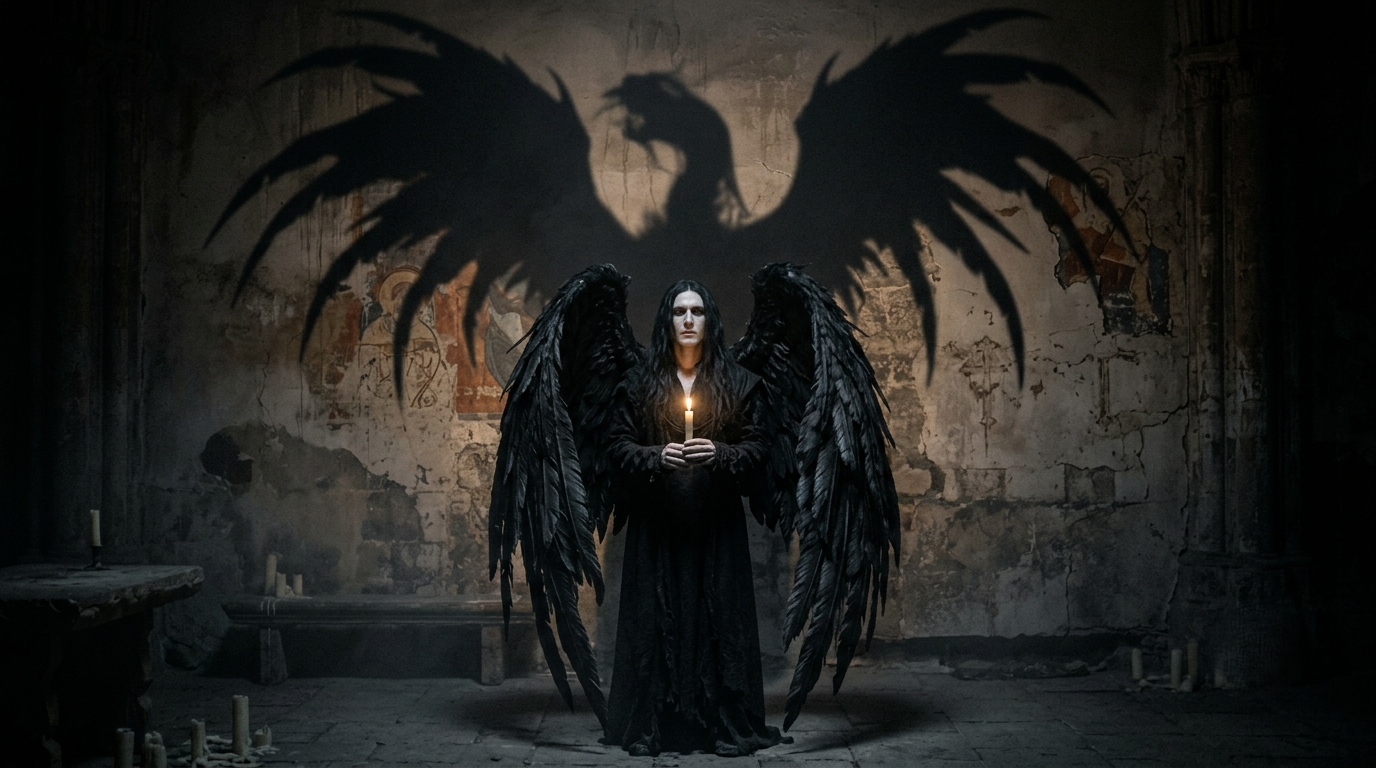
A Fall Hidden Inside a Prophecy
One of the most important texts in the later Lucifer tradition appears in Isaiah 14, where a fallen figure is described using imagery connected with the morning star.
But there is an important detail that often disappears in modern retellings.
In its original biblical context, the passage is a taunt against the king of Babylon. It is not presented as a straightforward biography of a supernatural being named Lucifer.
Centuries of Christian interpretation, however, connected this imagery with the idea of Satan's fall from heaven.
Over time, these interpretations became intertwined with literature, art, theology and popular storytelling.
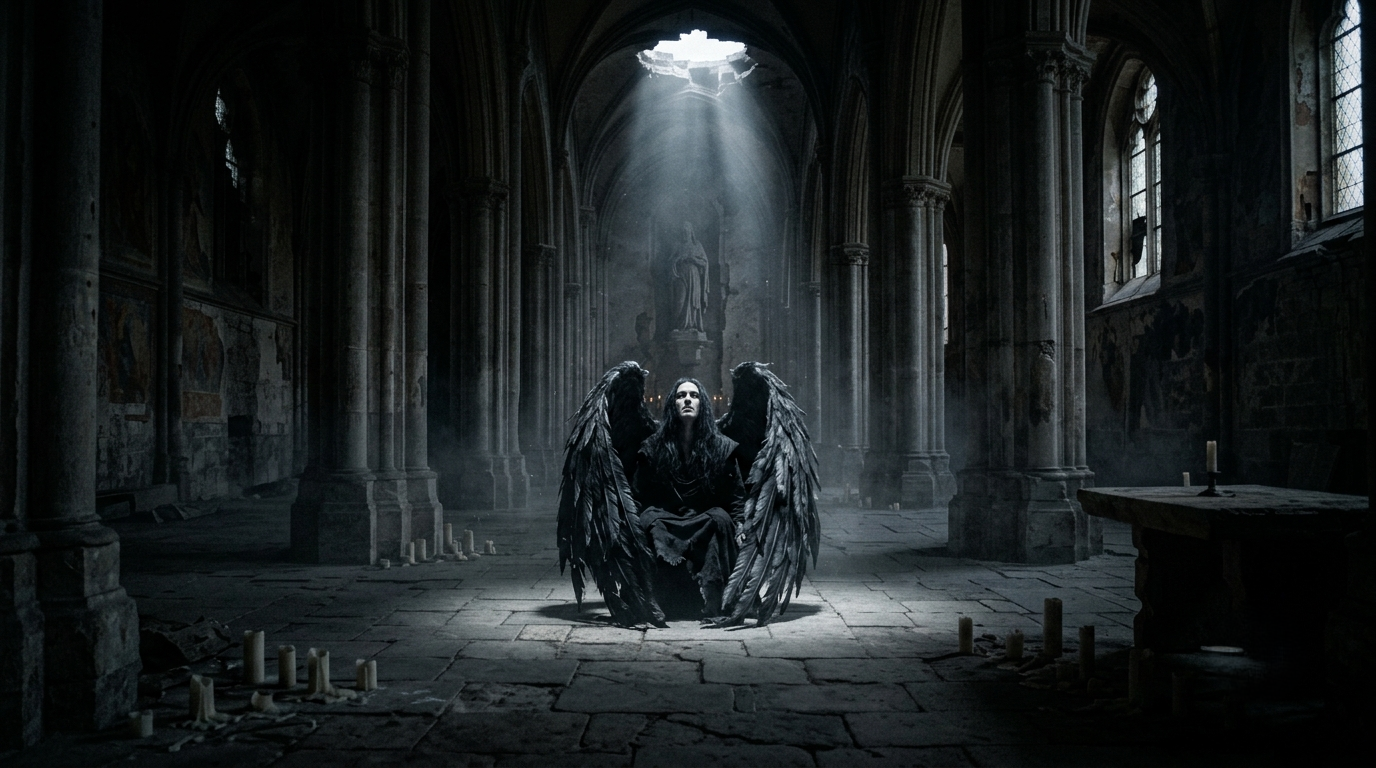
“The frightening part of the story was never simply the fall. It was the question of what could make something associated with light become a symbol of darkness.”
The Story of the Fall
In later Christian tradition, Lucifer became associated with the story of a magnificent heavenly being whose pride led to rebellion against God.
The exact details of this story are not contained in one single biblical passage. Instead, ideas from different passages and centuries of theological interpretation became connected into the familiar narrative of a glorious being who fell from heaven.
Pride became the central theme.
The brightest became fallen. The elevated became cast down. The morning star became a symbol of darkness.

The image was powerful enough to survive centuries of changing artistic styles and religious interpretations.
When the Angel Became the Devil
Medieval Europe gave the story a visual language.
Religious paintings, manuscripts, sculptures and theatrical representations gradually developed increasingly recognizable imagery surrounding demons and fallen angels.
Dark wings. Distorted bodies. Fire. Horns. A monstrous face.
But these images should not be mistaken for a single ancient description of Lucifer.
They are the result of centuries of religious art, interpretation and cultural imagination.
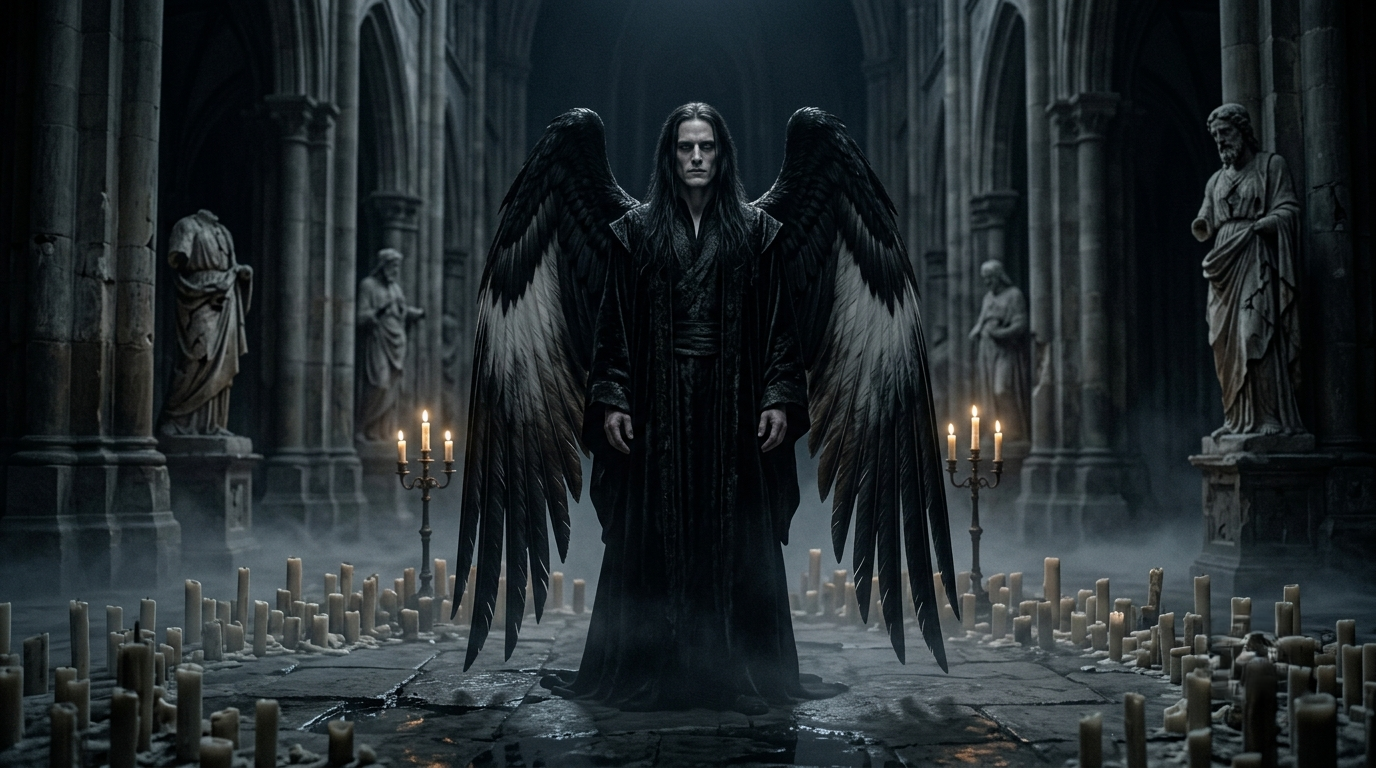
One Name. Many Interpretations.
Somewhere along the way, three ideas began appearing together in popular imagination:
Lucifer. The light-bearer.
Satan. The adversary or accuser in biblical tradition.
The Devil. The embodiment of evil in later Christian thought.
Modern horror often treats all three as one identical character. Historically and theologically, however, the development is much more complicated.
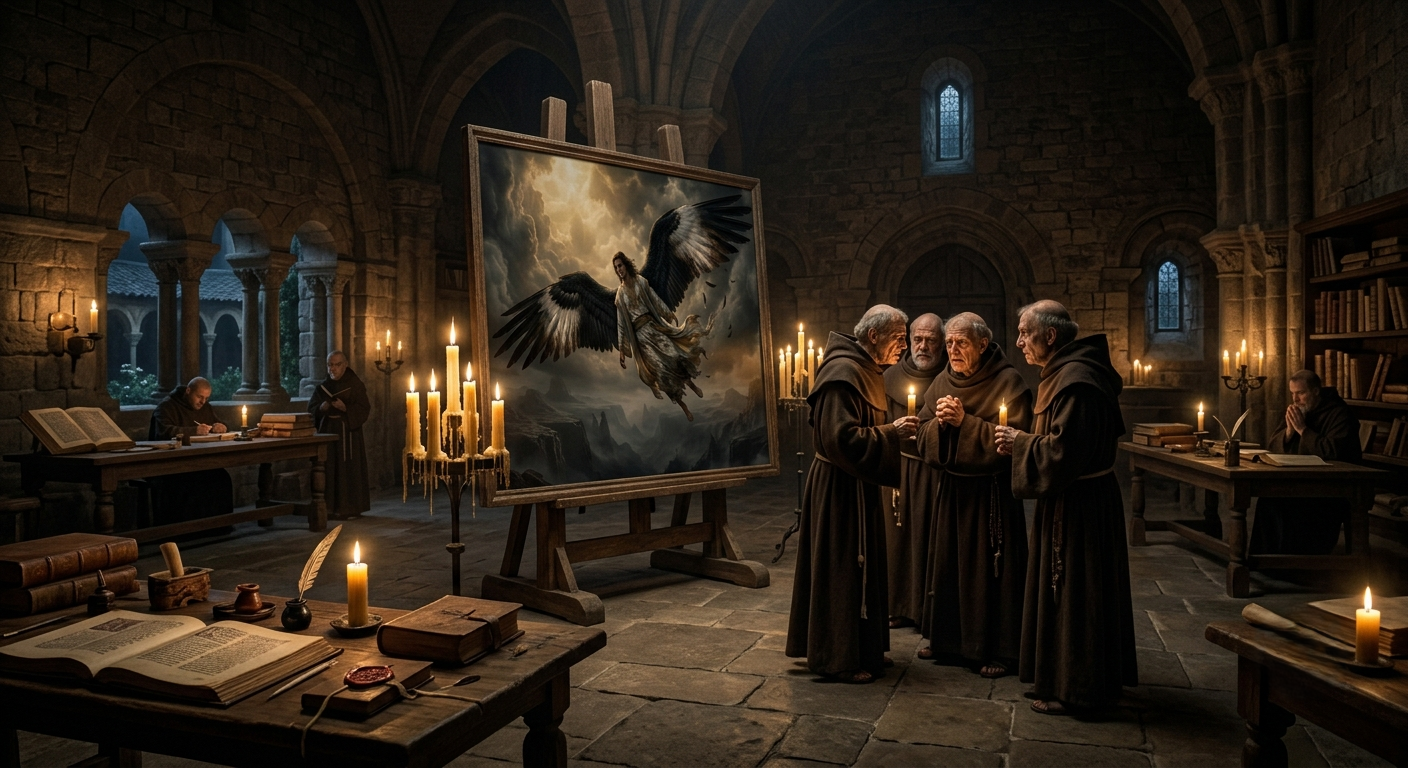
The Beautiful Face in the Dark
Modern horror has returned to an older and more disturbing idea: what if evil did not look monstrous?
What if it looked beautiful?
Calm.
Intelligent.
Almost comforting.
That interpretation has become one of the most unsettling ways Lucifer is portrayed in modern fiction.

There is no need for a monster's face.
The horror comes from the possibility that something can appear perfectly human while carrying an entirely different meaning.
What Was Standing Behind Him?
Imagine an abandoned cathedral after midnight.
No congregation. No music. No voices.
Only rows of empty seats and the sound of a candle burning somewhere beyond the darkness.
At the far end of the building stands a man dressed in black.
He does not move.
You raise your camera.
The photograph looks normal.
Almost.
Because the shadow behind him is larger than the man himself.
There is no historical record proving such an encounter. It is simply the kind of image that modern horror has learned to build from an ancient name.
Lucifer should not automatically be presented as a historically verified supernatural entity. The word has a long linguistic and religious history, while the familiar story of Lucifer as a fallen angel who became Satan developed through later interpretation, theology, literature and culture.
The Morning Star Still Rises
Every morning, Venus can appear in the sky before sunrise.
A bright point of light appears above the horizon while the rest of the world is still dark.
For thousands of years, humans have looked at that light and given it names.
One of those names was Lucifer.
Somewhere between language, scripture, theology and imagination, the light-bearer became the fallen angel.
The fallen angel became the Devil.
And the Devil became one of the most recognizable figures in horror culture.
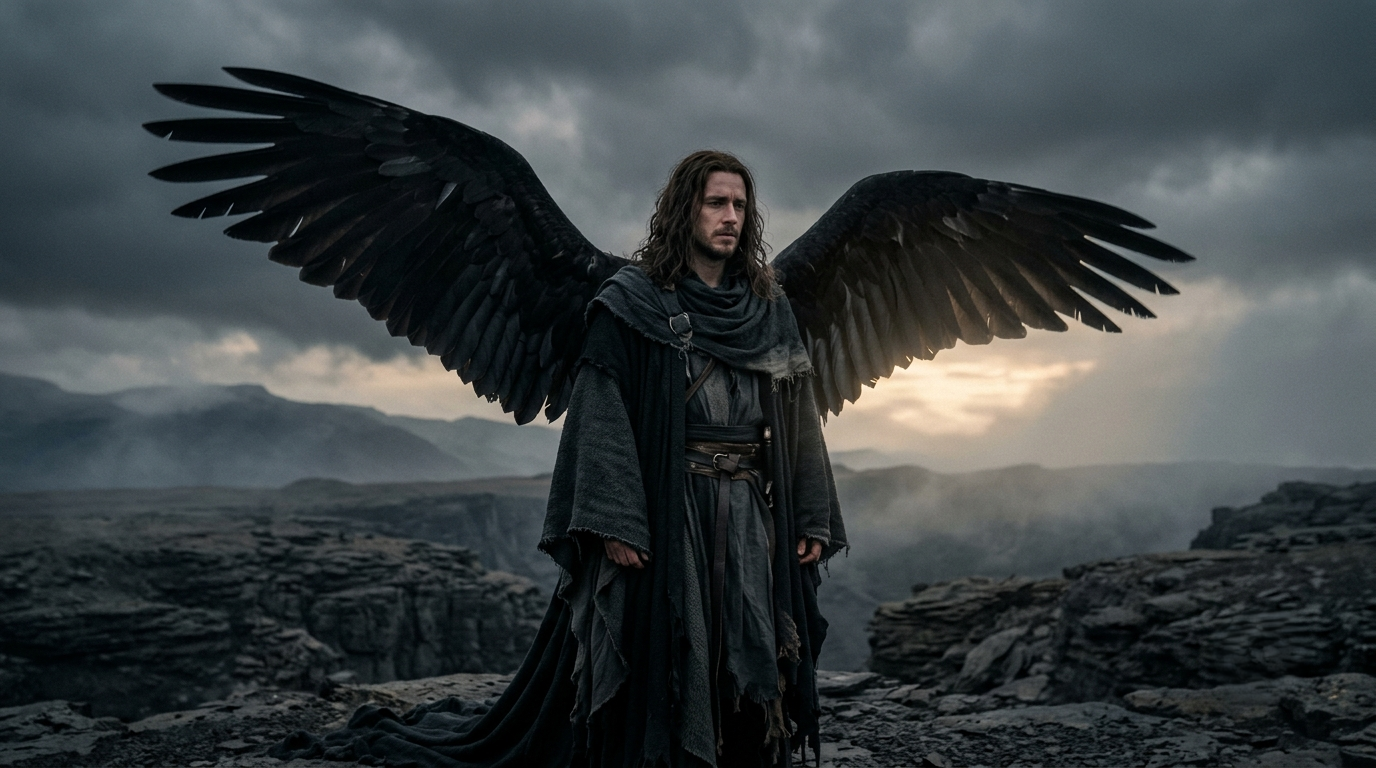
THE LIGHT THAT BECAME DARKNESS
Perhaps that is what makes Lucifer different from an ordinary horror creature.
He was never simply a monster waiting in the darkness.
His story began with a word connected to light.
And somehow, after centuries of interpretation, that same word became one of humanity's most enduring symbols of darkness.
The morning star still rises. The question is what we choose to see in it.
NISHI
The Voice That Calls Your Name
BENGALI FOLKLORE · NIGHT LEGENDS · THE UNKNOWN
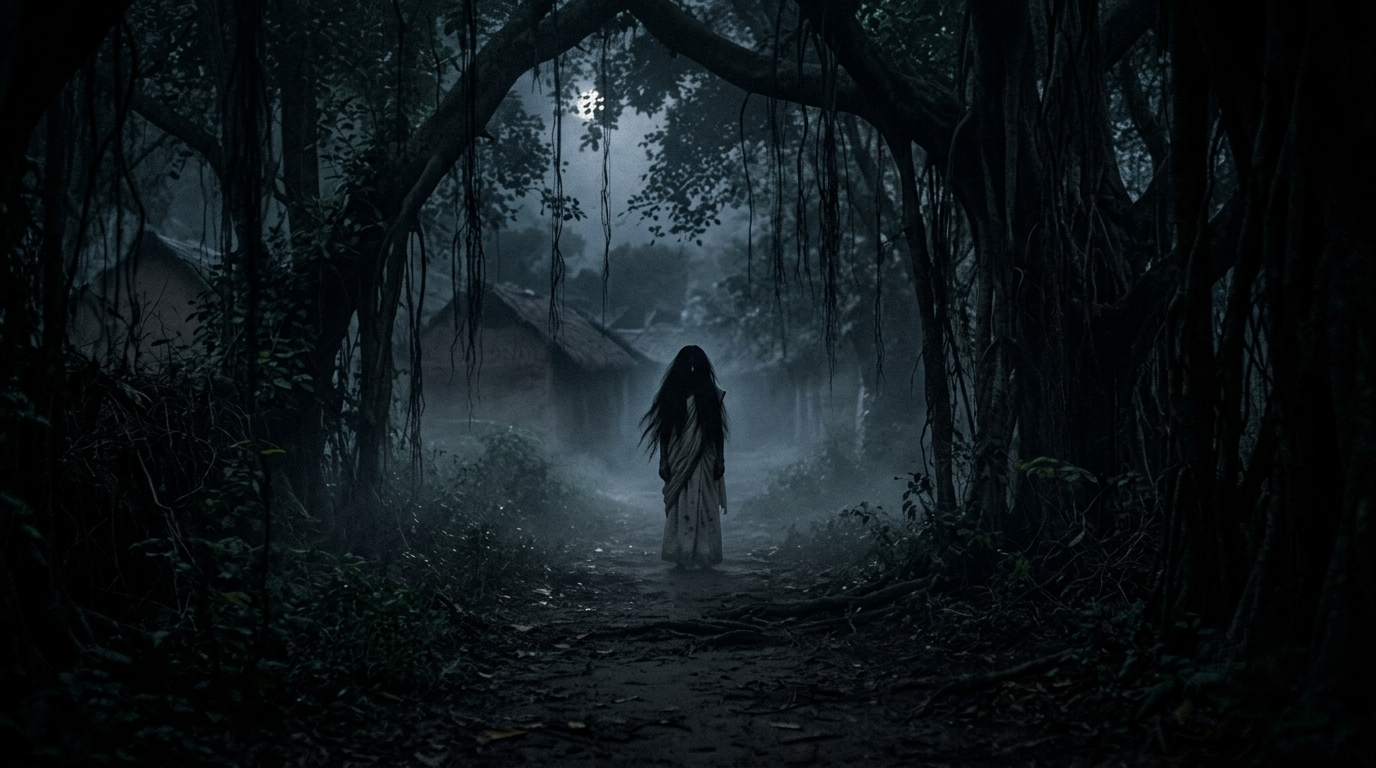
An AI-generated visual interpretation inspired by Bengali folklore. Not a historical photograph.
Imagine walking home through a quiet village after midnight. The road is empty. The trees barely move. Somewhere in the darkness, a familiar voice calls your name.
It sounds like someone you know. Maybe a friend. Maybe a family member. The voice comes again, gentle and unmistakable. But when you look around, there is nobody there.
In stories told in parts of Bengal, this frightening idea is associated with Nishi, a mysterious spirit said to lure people by calling them at night. The most unsettling part of the legend is not what the spirit looks like. It is the possibility that the voice might sound completely familiar.
I. THE VILLAGE THAT WENT SILENT
The following is a fictional horror story inspired by the Nishi legend. Its characters and events are invented; it is not presented as a documented supernatural incident.
The village of Chandipur sat beyond a stretch of paddy fields in rural Bengal. During the day, its narrow paths were full of ordinary life: bicycle bells, market vendors, children returning from school and neighbours calling across courtyard walls.
After midnight, the same village became unrecognisable. Shutters closed. Oil lamps went out one by one. The old trees along the paths turned into enormous black shapes against the sky.
Twenty-year-old Arindam had grown up hearing warnings about walking alone after dark. His grandmother had one rule she repeated whenever he went out late: if a voice called from somewhere you could not see, do not follow it simply because you recognised the sound.
Arindam considered it an old village superstition. He was not especially frightened by ghost stories, and he had heard plenty of them. To him, the warnings were the sort of thing elders used to make young people return home before everyone else had gone to bed.
Then, one humid night, he heard his mother's voice on the road.
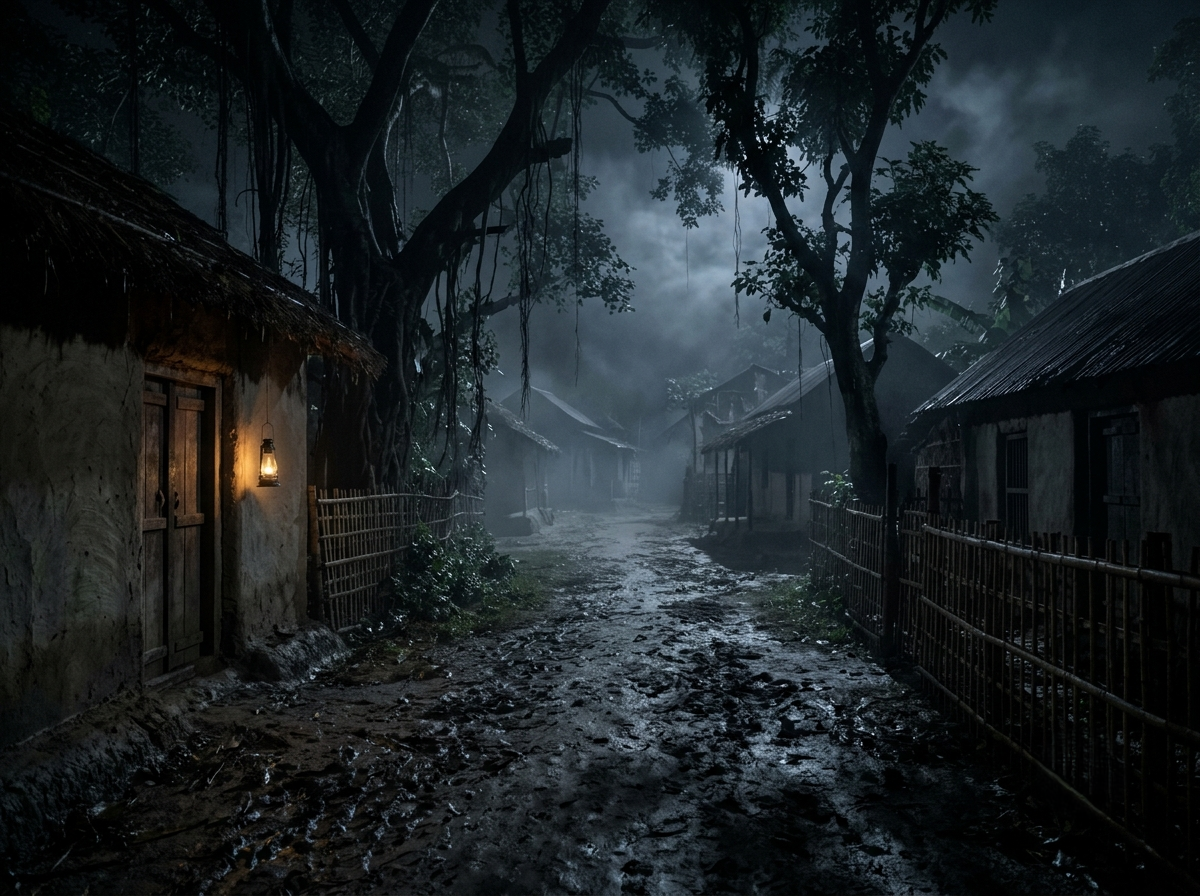
The familiar village after the last lights have gone out.
He had stayed late at a friend's house on the other side of the village. By the time he started home, the shops had closed and the lanes were empty. He walked quickly, listening to the soft crunch of dust beneath his sandals.
Near a large banyan tree, he heard it.
The voice came from a narrow path leading away from the main road. It sounded like his mother calling him from the courtyard.
He stopped. His mother was supposed to be at home, several streets away. Perhaps she had come looking for him. Perhaps something had happened. He turned towards the sound and took one step off the road.
Then he remembered her words from years ago.
Never follow a voice just because it knows your name.
II. THE FIGURE BENEATH THE TREE
Arindam raised his phone and switched on its flashlight. The beam travelled across the path, over tangled roots and damp leaves, before disappearing into the fog.
At the far end stood a woman wearing a pale saree. Her long hair covered most of her face. She was too far away for him to make out her features, yet she seemed to be looking directly at him.
"Ma?" he called.
The woman did not answer. She tilted her head slightly, as if listening. Then the voice came again.
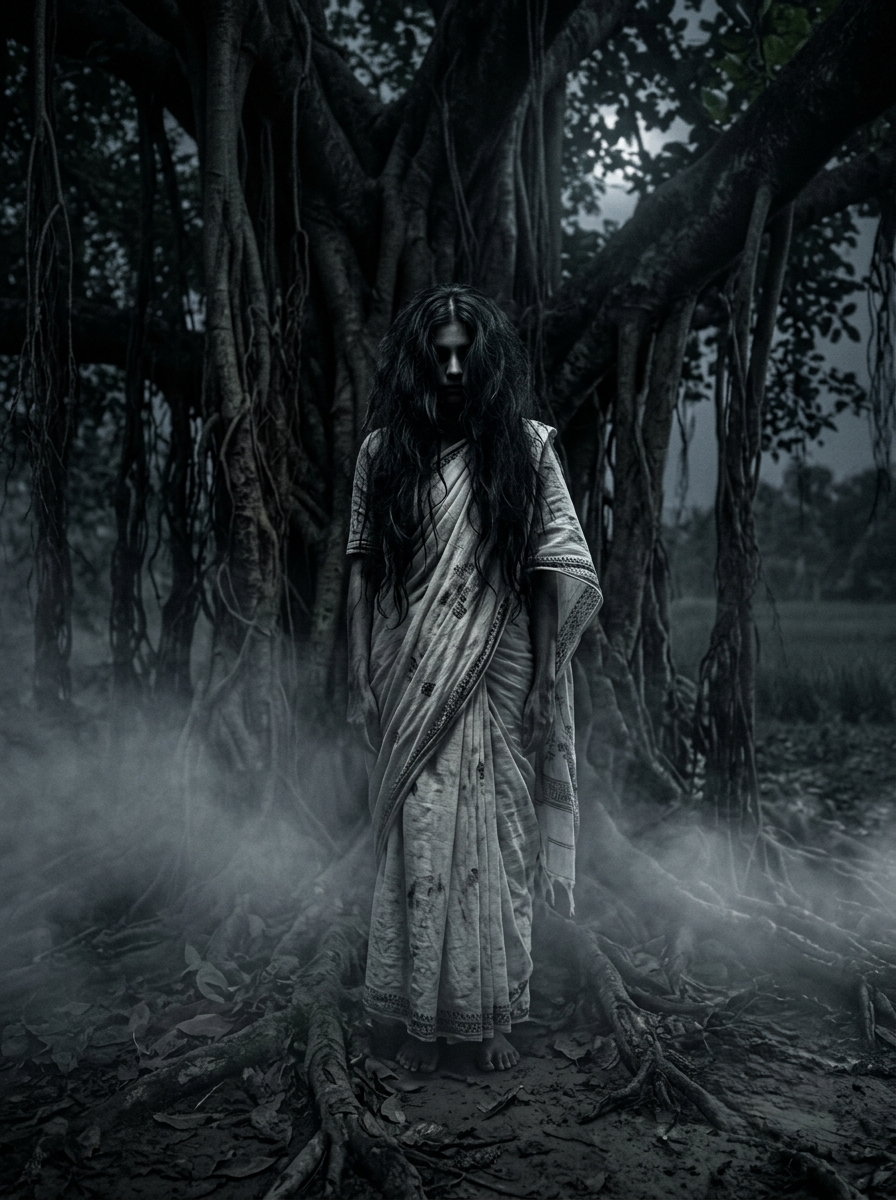
The figure in white, as imagined in this fictional retelling.
Something about the voice felt wrong. It sounded exactly like his mother's, but there was no impatience in it, no familiar sharpness, no ordinary human emotion. It was calm in a way that made the empty path seem even quieter.
Arindam stepped backwards.
The figure did not move. Yet the distance between them suddenly seemed smaller. He could not explain why. Perhaps the fog had shifted. Perhaps fear had distorted his sense of distance. He only knew that he no longer wanted to stand there.
He turned and hurried towards the main road.
Behind him, the voice called once more. This time it did not sound like his mother.
It sounded like Arindam himself.
He did not turn around.
III. THE VOICE AT THE WINDOW
Arindam reached home breathless. His mother was sitting in the courtyard, sorting vegetables beneath a dim bulb. She looked up, annoyed that he had returned so late.
He asked whether she had come looking for him.
She frowned. She had been home all evening.
He told her about the voice, the woman and the path beneath the banyan tree. His mother stopped sorting the vegetables. For a moment, neither of them spoke.
Then she told him not to walk that route alone again at night.
She did not confirm that he had seen a spirit. She did not claim to know what had happened. She simply locked the courtyard gate and asked him to get some rest.
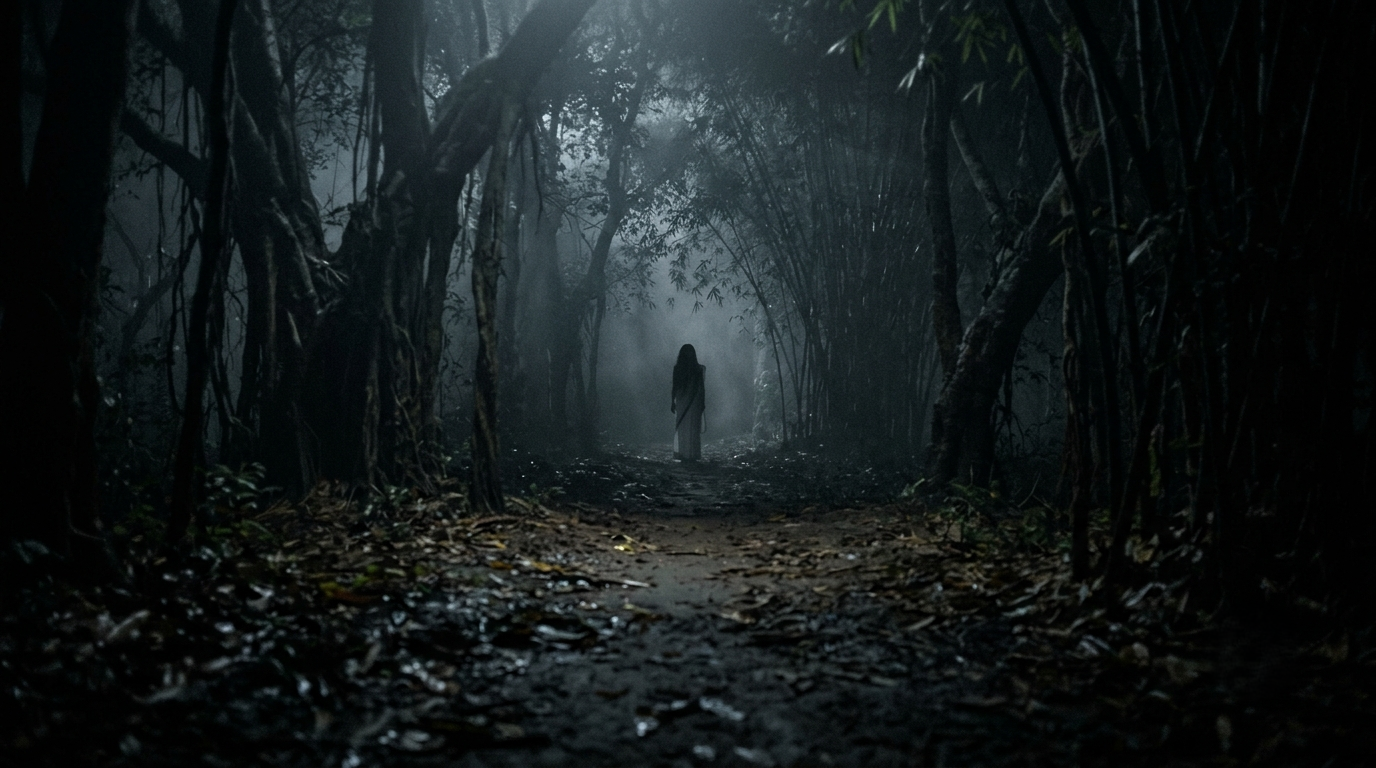
An imagined moment from the story: a quiet house, a dark courtyard and an unanswered question.
That night, Arindam woke to the sound of someone outside his window.
Three soft knocks.
He lay still, listening. A branch scraped the roof. Somewhere far away, a dog barked and then fell silent.
A voice came from the other side of the window.
"Arindam?"
It was his own voice.
He pulled the blanket over his head and waited until morning. When daylight finally entered the room, the courtyard looked ordinary. There were no footprints beneath the window, no figure near the gate and no sign that anyone had been there.
Perhaps he had dreamed it. Perhaps exhaustion and fear had made his mind play tricks on him. Those explanations were reasonable.
They did not stop him from checking the window lock twice.
IV. WHAT IS A NISHI?
The Nishi is a figure found in Bengali folklore. In commonly retold versions of the legend, it is associated with a voice that calls a person by name during the night. Some tellings describe the voice as familiar, using the sound of a loved one to tempt someone away from safety.
The name is connected with the Bengali word for night. Details of the legend vary between tellers and regions, so there is no single universal description of what a Nishi looks like or exactly what it does.
Unlike a monster whose appearance gives it away, the frightening idea behind this legend is uncertainty. The voice might sound ordinary. The path might look familiar. The danger, in the story, lies in trusting what cannot be verified.
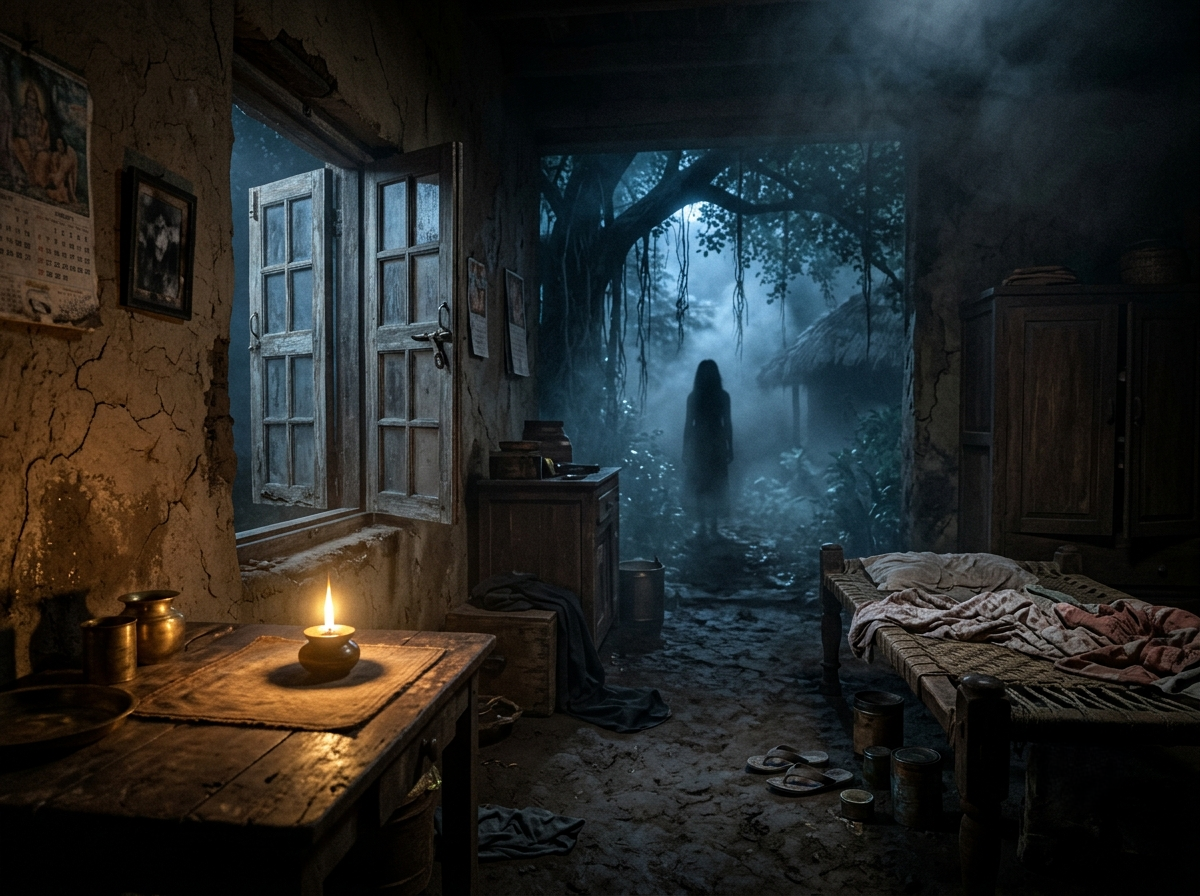
A visual interpretation of the uncertainty at the heart of the Nishi legend.
SPIRIT PROFILE
- Name: Nishi
- Folklore region: Bengal
- Common motif: A mysterious voice calling someone at night
- Reported appearance: Varies between stories; no single fixed form
- Role in folklore: A warning against following an unexplained voice into darkness
- Evidence status: A folklore figure; supernatural claims have not been scientifically verified
V. WHY DOES THIS LEGEND FEEL SO REAL?
The most effective horror does not always need a visible creature. Sometimes it needs only a familiar sound in an unfamiliar place.
Human beings naturally pay attention to their names and to voices they recognise. In darkness, limited visibility and uncertainty can make ordinary sounds feel threatening. Expectations, fear and memory can also influence how a situation is interpreted.
These everyday experiences help explain why a story about a voice in the night can remain unsettling long after it has been told. They do not prove that a supernatural being is responsible.
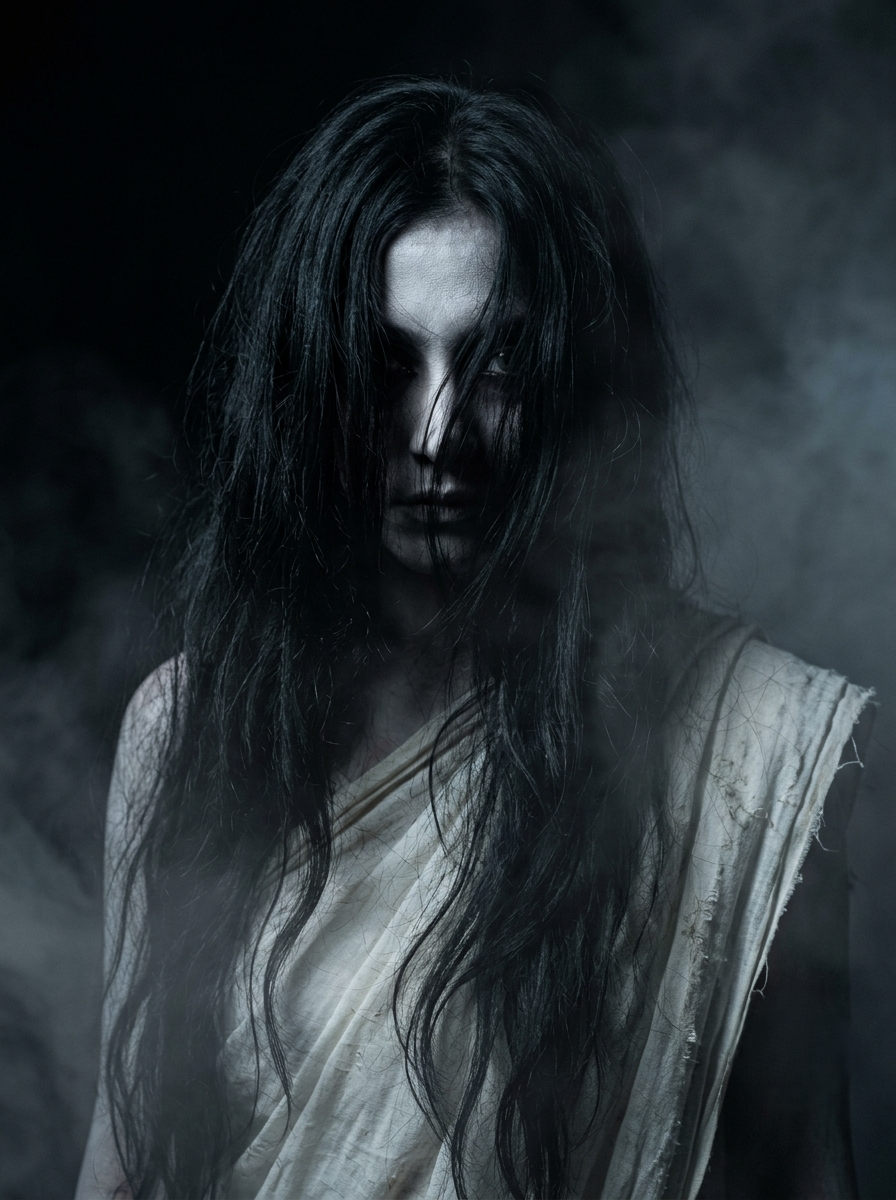
The unseen can be frightening precisely because the mind tries to fill in what is missing.
That is what makes Nishi such a powerful figure in a horror story. It does not need to break a door or chase someone through a house. It only needs to call from somewhere beyond the light.
VI. MYTH VS REALITY
WHAT THE LEGEND SAYS
In popular tellings, Nishi calls people at night and may imitate a familiar voice to draw them away. Details vary across oral traditions.
WHAT CAN BE VERIFIED
Nishi is a figure of Bengali folklore. Folklore records what communities tell, fear and pass between generations; they do not, by themselves, establish the existence of a supernatural being.
WHAT REMAINS UNPROVEN
There is no reliable scientific evidence that a Nishi can imitate voices or lure people through supernatural means. Individual experiences should not automatically be treated as proof of a haunting.
This entry combines a retold fictional narrative with information about regional folklore. The characters and events in Arindam's story are invented. The images are AI-generated interpretations, not evidence of a real entity.
VII. THE LAST CALL
Arindam avoided the banyan-tree path for weeks. The village returned to its usual rhythm. The markets opened, children played outside and the night once again became just another part of the day.
He eventually stopped telling people what he thought he had heard. Every retelling made the memory feel less like an event and more like a dream.
One evening, months later, he was walking home with his younger cousin. They reached the turning near the banyan tree just as the sky darkened. From somewhere beyond the path came a faint voice.
"Arindam..."
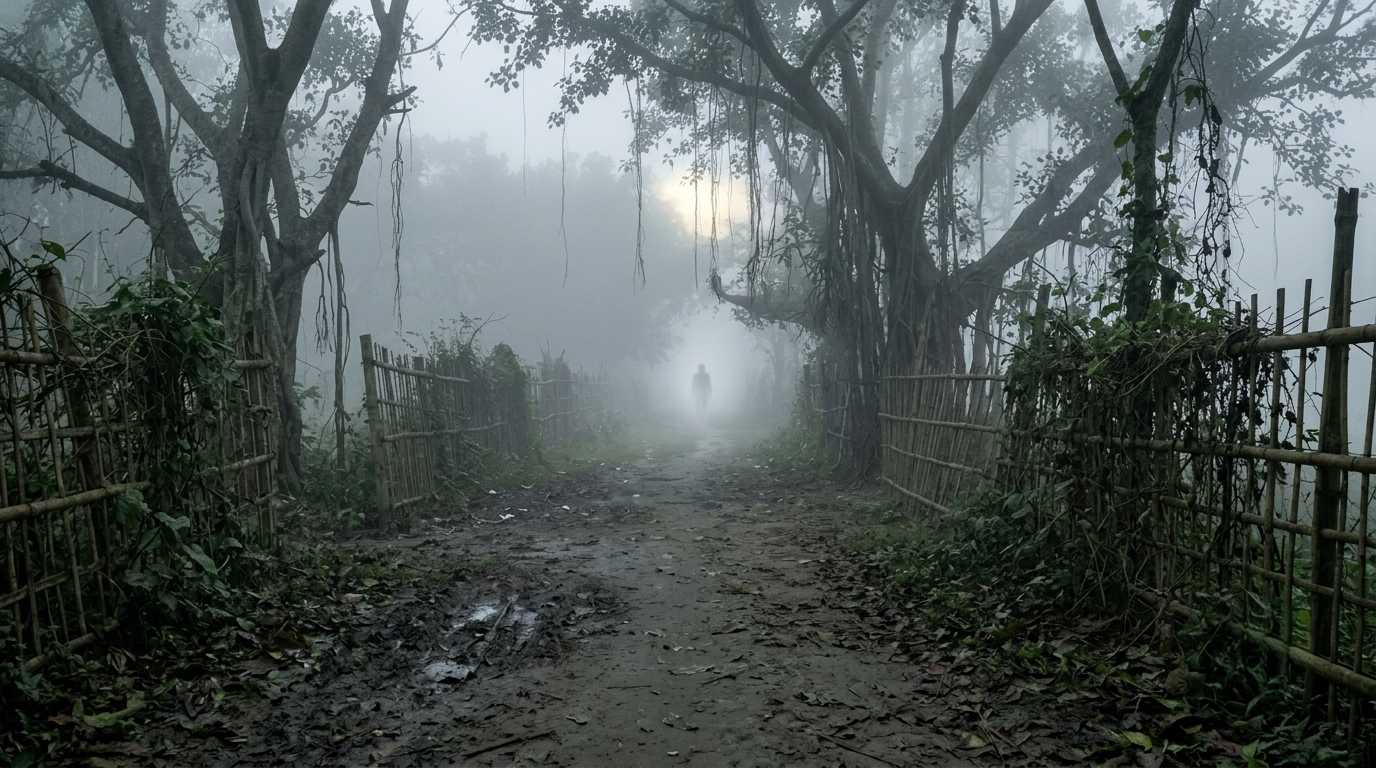
The road is empty. The story leaves the question unanswered.
His cousin heard nothing. She asked why he had stopped walking.
Arindam looked down the dark path. There was no woman in white, no moving shadow and no visible sign of anyone standing among the trees.
He took his cousin's hand and continued towards home without looking back.
Maybe the sound had come from a distant house. Maybe someone had called another person's name. Maybe memory had supplied a voice where there was none.
The path remained empty.
But in the oldest versions of the warning, the rule was always the same: you do not have to answer every voice that calls you in the dark.
THE CHUDAIL
The Woman Who Walks Backwards
INDIAN FOLKLORE · NIGHT ENCOUNTERS · THE UNKNOWN
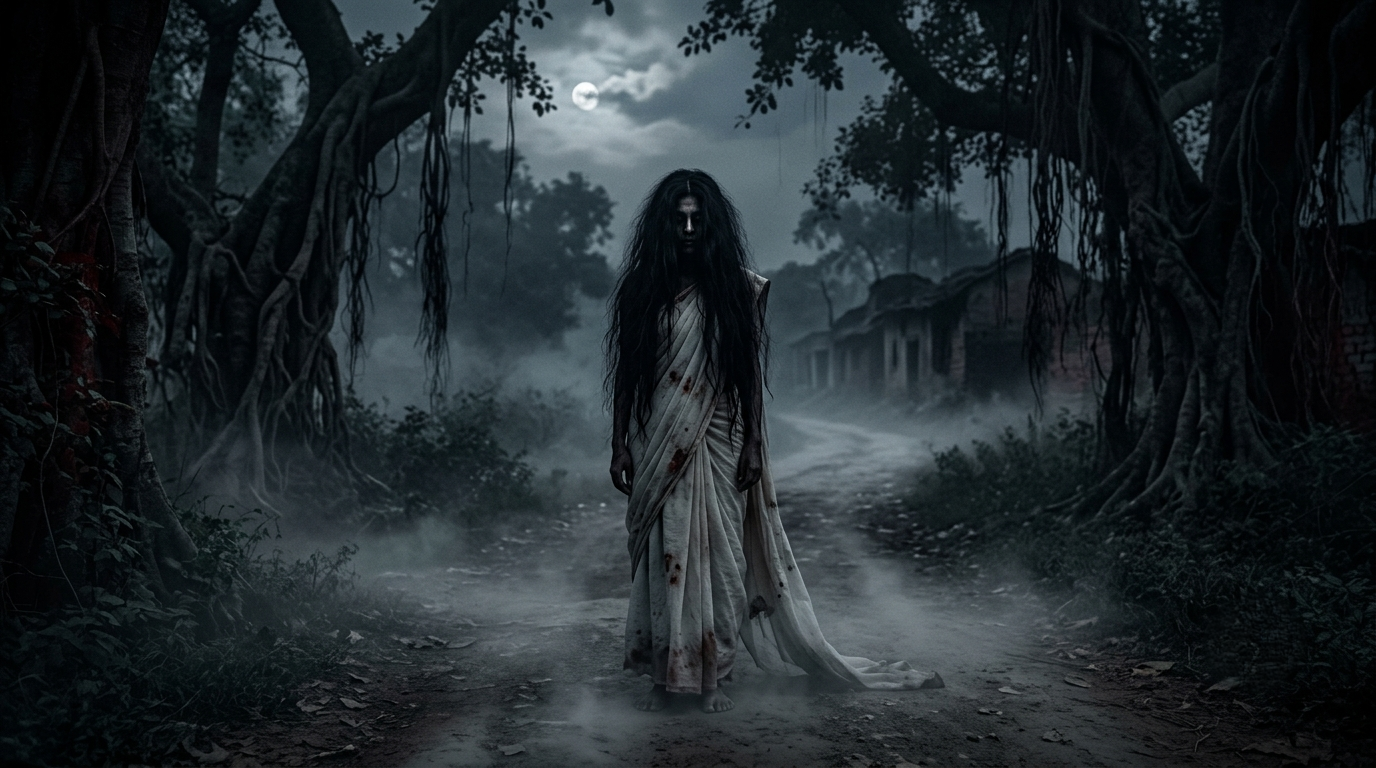
AI-generated visual interpretation inspired by Indian folklore, not a real paranormal photograph.
Every culture has stories about the things people fear after dark. In many parts of India, one of the most recognisable figures is the Chudail: a mysterious female spirit whose appearance and story change from region to region.
Some popular retellings describe a woman with long, unkempt hair, unusual feet and an appearance that seems ordinary from a distance but unsettling when viewed closely. Other versions focus on betrayal, injustice or a spirit seeking revenge.
But imagine meeting someone on a deserted road who looks like an ordinary woman standing alone. You approach her, and then notice something that makes you question everything you thought you saw.
This is a fictional horror story inspired by Chudail folklore. Its characters and events are invented.
I. THE ROAD AFTER MIDNIGHT
The shortest route to Devgarh village passed an old banyan tree, a dry well and a row of abandoned houses. During the day, villagers used the road without thinking about it. At night, most people preferred the longer route beside the main market.
Twenty-two-year-old Karan never understood the fuss. He had grown up listening to stories about spirits that appeared near trees, wells and deserted roads. He considered them old-fashioned warnings designed to stop people from wandering around after dark.
One evening, Karan stayed late at a friend's house. By the time he began his journey home, the market had closed. His phone battery was nearly empty, and the longer route would take another forty minutes.
He chose the old road.

The abandoned road outside Devgarh, as imagined in this fictional retelling.
The night was strangely quiet. No motorcycles passed. No dogs barked from the courtyards. Even the leaves seemed motionless.
Then Karan noticed a woman standing beside the banyan tree.
She wore a pale saree. Her long black hair hung forward, hiding most of her face. She was standing with her back towards the road, looking into the darkness beyond the tree.
Karan slowed down. He wondered whether she needed help.
The woman did not answer.
He took another step towards her. Somewhere in the distance, a metal gate creaked in the wind. The woman slowly turned her head.
But she did not turn her body.
Karan stopped walking.
II. THE WOMAN IN WHITE
From where he stood, Karan could barely see her face. Her hair covered one side, and the rest was hidden in shadow. She looked like someone who had been standing outside for a very long time.
"It's late," he said. "The village is that way."
The woman tilted her head. A faint smile appeared beneath her hair.
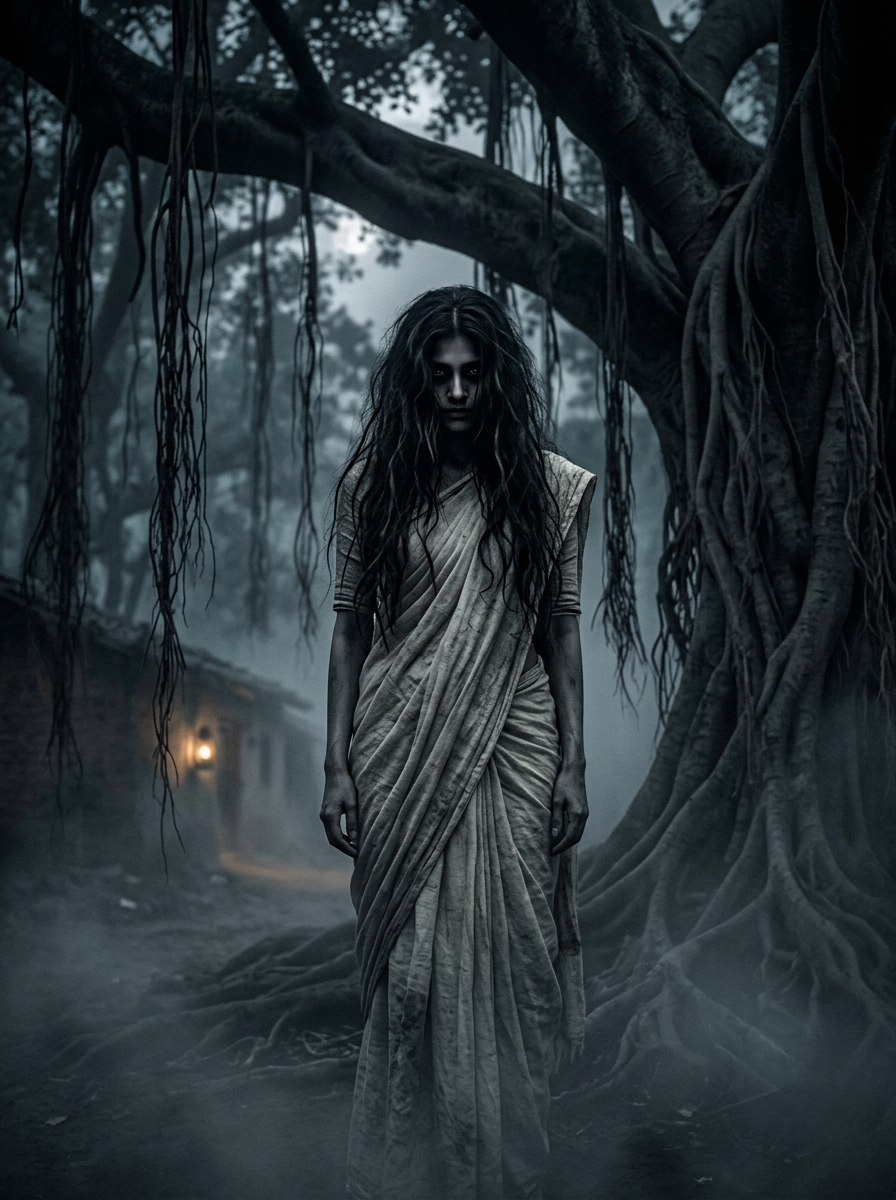
A visual interpretation of the mysterious woman in the story.
"You are going the wrong way," she whispered.
Karan glanced towards the road ahead. It was the road he had taken countless times as a child. The village lights were visible in the distance.
"No," he replied. "My home is that way."
The woman gave a small laugh. It was quiet, almost polite, but it did not seem to belong in the empty surroundings.
"Then why are you walking towards me?"
Karan had no answer. He had approached because he thought she needed help. Yet he could no longer remember deciding to take those last few steps.
He moved backwards. The woman remained still.
As he stepped into the moonlight, he finally noticed her feet beneath the hem of her saree.
They seemed to point in the wrong direction.
Karan blinked, trying to make sense of what he was seeing. The fabric shifted in the breeze. Perhaps the shadows had distorted the shape. Perhaps he was looking at an unusual angle.
Then the woman took one step towards him.
Her body faced the road.
Her feet appeared to face the other way.
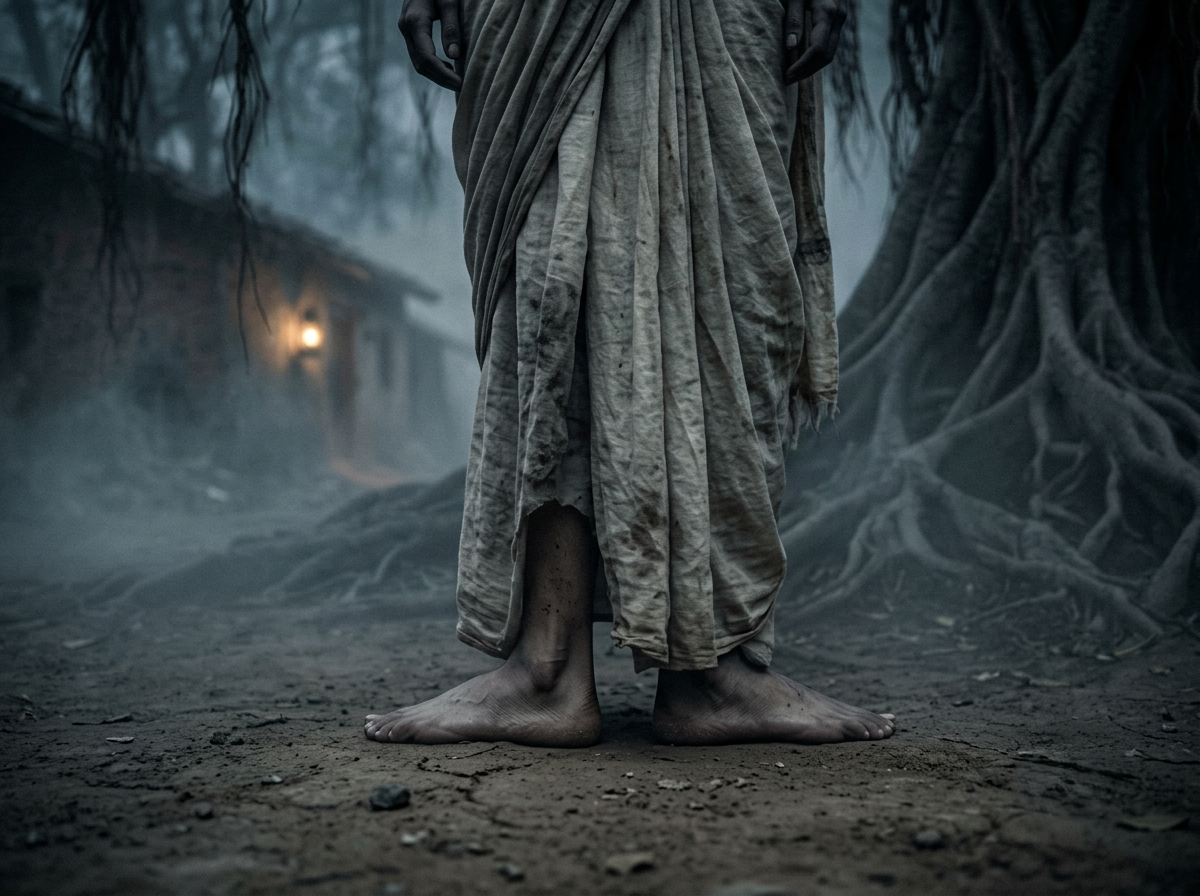
The backward-feet detail is a popular motif in some Chudail stories, not a feature shared by every regional version.
Karan turned and ran.
III. SOMETHING FOLLOWED HIM
He ran without looking behind him. The road seemed longer than he remembered. The village lights flickered between the trees, always visible but never quite close enough.
Behind him, he heard footsteps.
They were not hurried. They were slow, measured steps, as though whoever was following him knew that he had nowhere else to go.
Karan reached the dry well and stumbled against its stone edge. He caught himself before falling, then looked back.
The road was empty.
The woman was nowhere in sight.
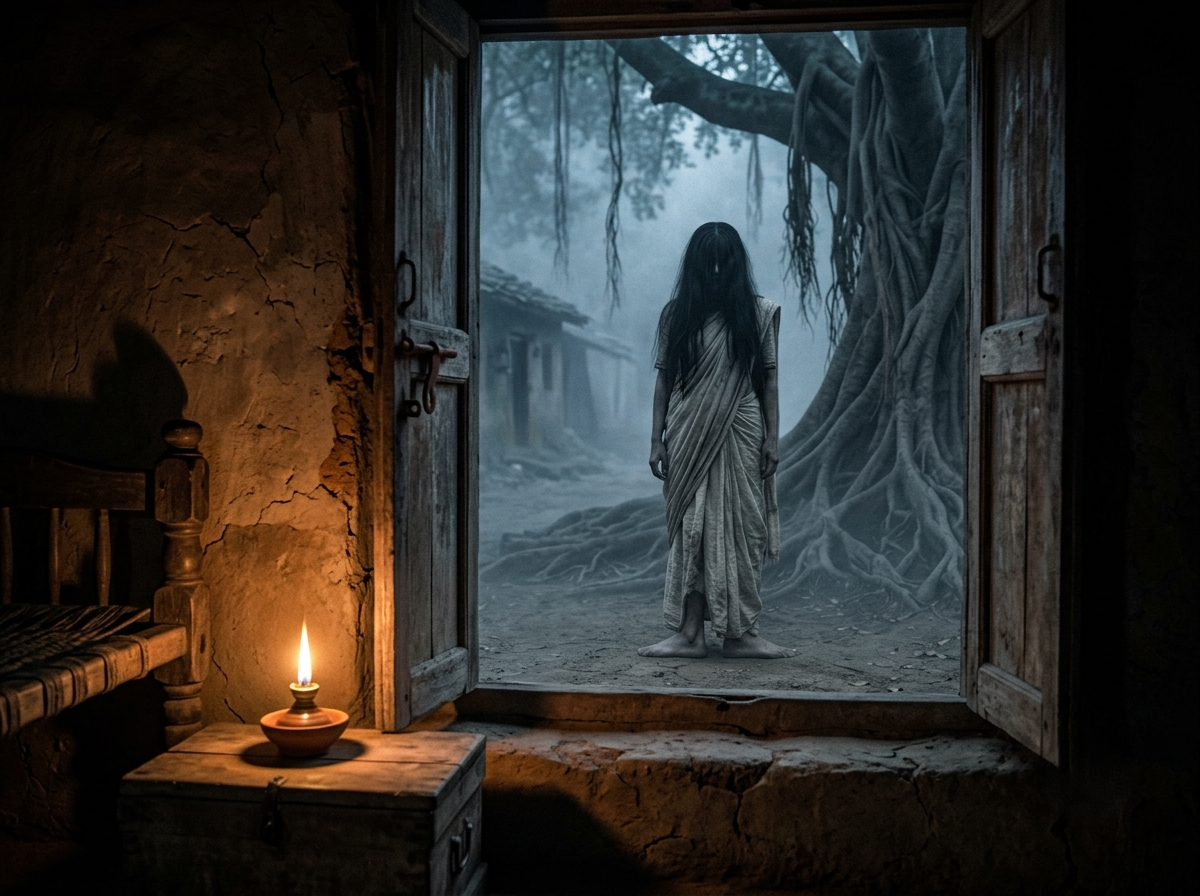
The road behind him was empty, but Karan could still hear the footsteps in his memory.
He waited, listening. A breeze moved through the branches overhead. Something rustled in the grass near the well.
Then a voice spoke from the other side of the road.
"You forgot to say goodbye."
Karan ran again. This time, he did not stop until he reached the first house at the edge of Devgarh.
An elderly shopkeeper was closing his shutters. Seeing Karan's face, he asked what had happened.
Karan told him about the woman, the strange feet and the footsteps that had followed him.
The shopkeeper listened without interrupting. When Karan finished, the old man looked towards the dark road.
"You saw someone near the banyan tree?"
Karan nodded.
"Then be grateful you came back to tell the story," the shopkeeper said. "But do not assume that every strange thing you see at night is what people call it."
He shut the shop and went inside.
Somehow, that answer frightened Karan more than a simple ghost story would have.
IV. THE STORY BEHIND THE NAME
The word Chudail is used in several South Asian languages for a female ghost or spirit in folklore. Stories about Chudails differ widely. In some tellings, the figure is associated with injustice or a tragic death. In others, she is described as a dangerous presence encountered at night.
The familiar image of a woman with long black hair and backward-facing feet is one of the best-known motifs in modern popular horror, but it is not a universal rule for every regional story.
Many folk narratives connect frightening supernatural figures with places that already feel isolated: old trees, abandoned paths, wells, ruins and crossroads. These settings make effective locations for stories because they combine darkness, uncertainty and the fear of being alone.
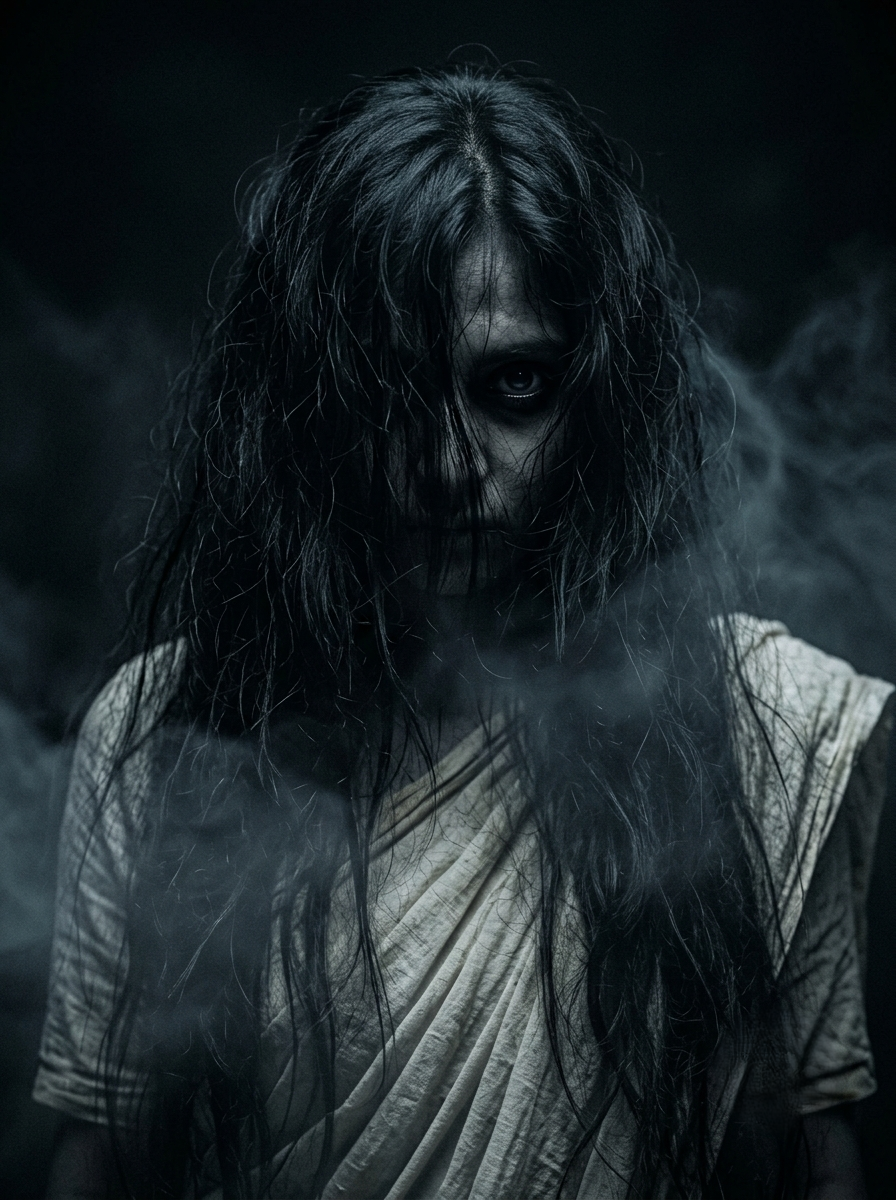
A modern AI interpretation of the Chudail as an unsettling figure from Indian folklore.
SPIRIT PROFILE
- Name: Chudail
- Region: South Asian folklore, with variations across communities
- Common depiction: A mysterious female spirit, often with long hair
- Popular motif: Backward-facing feet in some tellings
- Common story settings: Lonely roads, trees, abandoned places and village outskirts
- Evidence status: A folklore figure; supernatural existence has not been scientifically established
V. WHY DO CHUDAIL STORIES LAST?
The Chudail legend can carry more than one meaning. Depending on the community and the version of the tale, it may reflect fears about the night, vulnerability, social expectations, injustice or the consequences of ignoring local warnings.
Some versions portray the spirit as evil; others invite questions about the circumstances that supposedly made her a ghost in the first place. These differences matter. Folklore is not a single fixed script, and one story should not be treated as the definitive version for all of India.
There is also a simple reason these tales work so well as horror: a familiar human shape can become frightening when one small detail seems impossible. A woman standing on a road is ordinary. A woman whose movements appear to contradict what the eye expects is not.
Darkness makes it harder to check what we see. Fear can make uncertain details feel more significant. Neither experience proves that a spirit is present, but both help explain why these stories remain memorable.
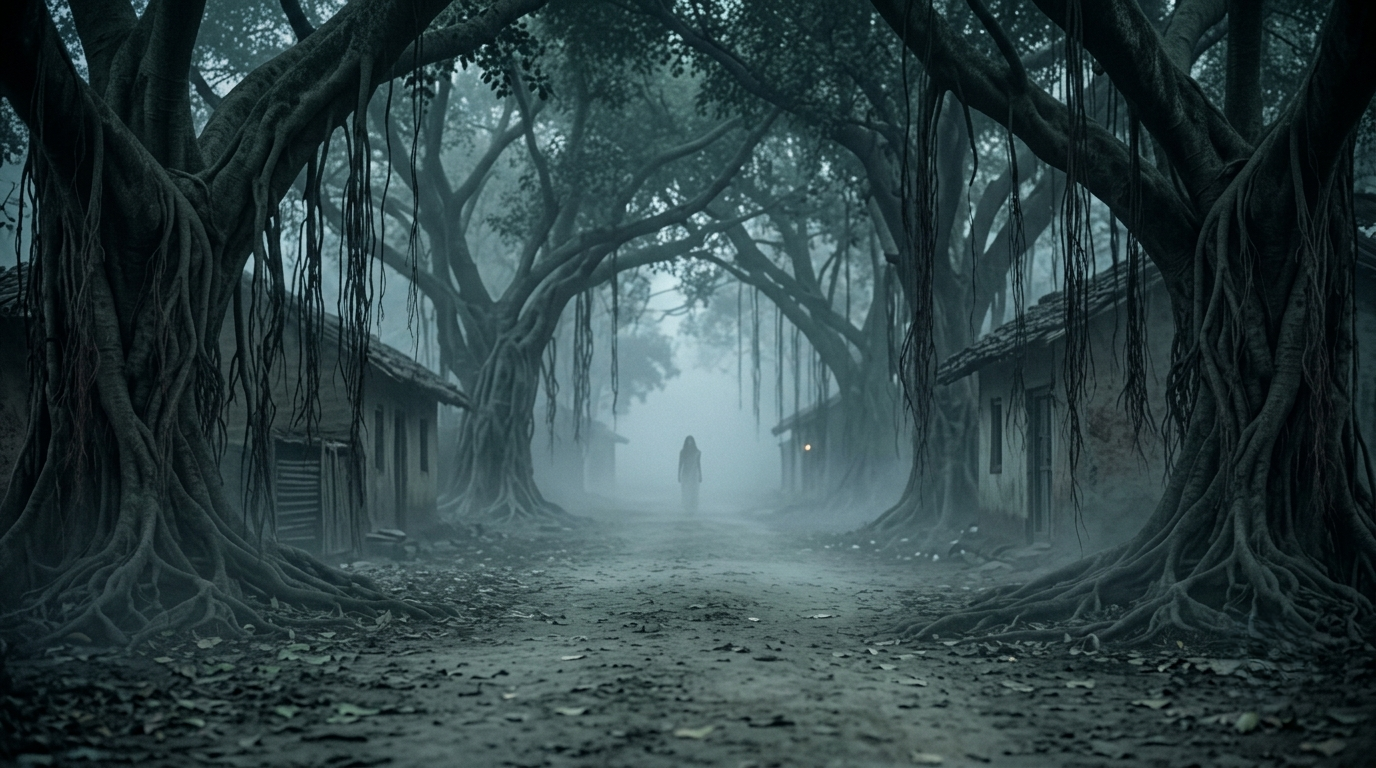
An imagined final glimpse of the road after the encounter.
VI. MYTH VS REALITY
WHAT THE LEGENDS SAY
Chudail stories describe a range of supernatural encounters. Some popular versions include long hair, unusual feet, lonely roads or a spirit connected to a tragic past.
WHAT WE CAN ESTABLISH
Chudail is a recognised figure in South Asian folklore and popular horror. The stories and their details vary by region, storyteller and retelling.
WHAT HAS NOT BEEN PROVEN
There is no reliable scientific evidence that Chudails exist as supernatural beings or that backward-facing feet are evidence of a haunting. Unusual nighttime experiences can have ordinary explanations.
Karan, Devgarh and the encounter described on this page are fictional. The narrative is inspired by folklore and should not be read as a verified eyewitness account. All images are AI-generated visual interpretations, not photographs of a real spirit.
VII. NEVER LOOK BACK?
Karan never used the old road again after midnight. His friends teased him about the story, and eventually he learned to laugh along with them.
He never claimed that he had definitely seen a ghost. Even he could not be certain what had happened in the darkness. Perhaps the shadows had distorted an ordinary stranger. Perhaps fear had filled the gaps in his memory.
Weeks later, he passed the banyan tree in daylight. The road looked small, dusty and entirely ordinary. There was no woman beneath the branches, no mysterious footprint in the dirt and no sign that anything unusual had ever happened there.
Karan was almost embarrassed by how frightened he had been.
Then he noticed something caught on a low branch: a strip of pale fabric, fluttering gently in the breeze.
It could have come from anyone's clothes. He knew that. He kept walking.
Behind him, a bicycle bell rang on the main road.
Karan did not turn around.
In the end, the scariest part of a Chudail story may not be what waits on the road. It may be how a single unexplained moment follows you long after the road itself is empty.